Frank Pietronigro: An Art Historical Perspective and Critical Retrospective (2026)
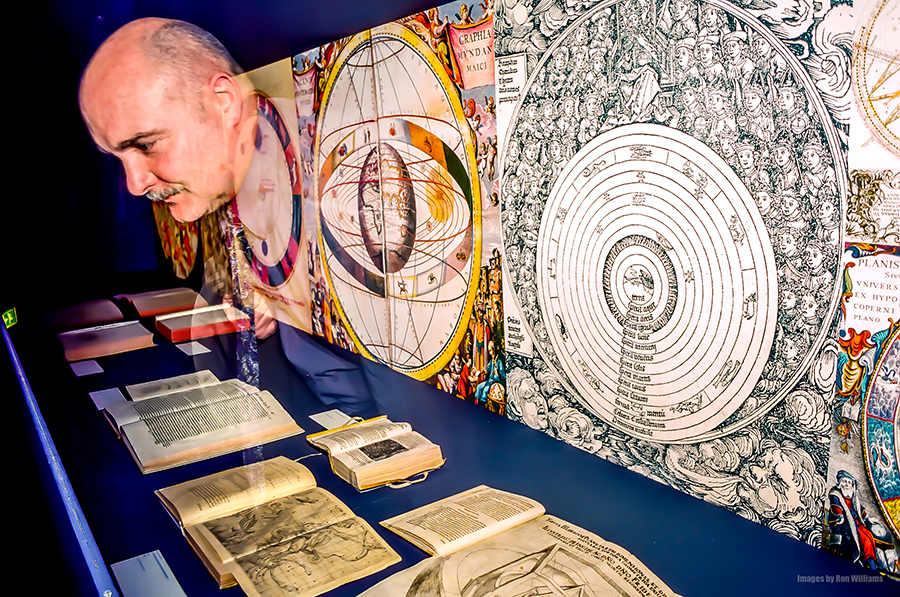
Frank Pietronigro looking at first edition printings of Copernicus’s De revolutionibus orbium coelestium (On the Revolutions of the Celestial Spheres) and Galileo’s Dialogue Concerning the Two Chief World Systems (1632). Museum für Gestaltung Zürich, Switzerland, 2001.
Frank Pietronigro’s career is an essential puzzle piece in the history of contemporary art because it systematically dismantled the container. He took the canvas off the easel, took the body out of gravity, took the paint out of the tube by replacing it with living biology, and took the acronym of science and forced it to accommodate the soul of human expression. It is a career marked not by the production of commercial commodities, but by the relentless expansion of what space—both terrestrial and cosmic—can mean for human consciousness.
When assessing the significance of an artist’s career, art history looks far beyond personal taste or aesthetic beauty, treating a lifetime of practice as a vital puzzle piece within a massive, interconnected cultural landscape. Examined through the rigorous frameworks of contemporary art history, the career of Frank Pietronigro represents a series of radical disruptions to the formal, spatial, and conceptual boundaries of human culture. His trajectory places him as a crucial link in the evolution of conceptual, biological, and aerospace art.
Innovation and Formal Breakthroughs
Technical and Material Innovation
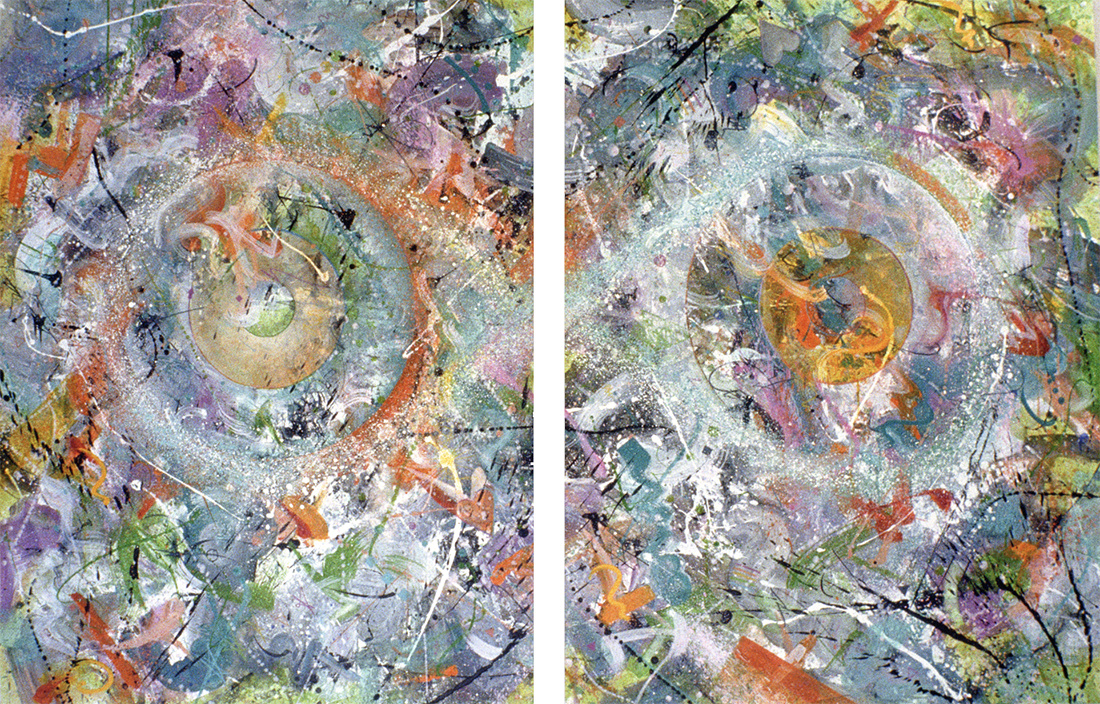
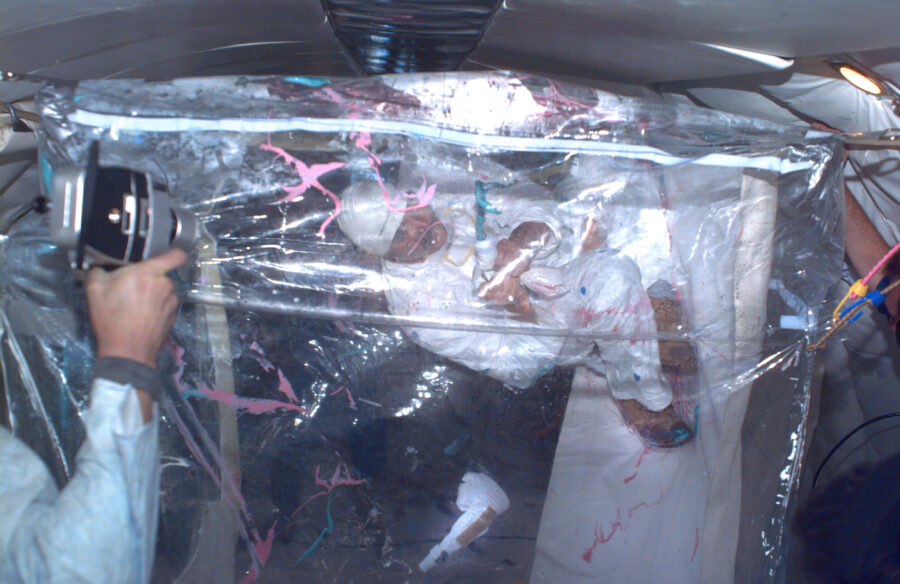
Pietronigro’s definitive breakthrough occurred on April 4, 1998, aboard the NASA KC135 turbojet during Research Project Number 33: Investigating the Creative Process in a Microgravity Environment. By releasing paint into a three-dimensional microgravity environment and allowing his body to drift through it, Pietronigro executed a profound technical leap: he liberated paint from the dictate of gravitational force.
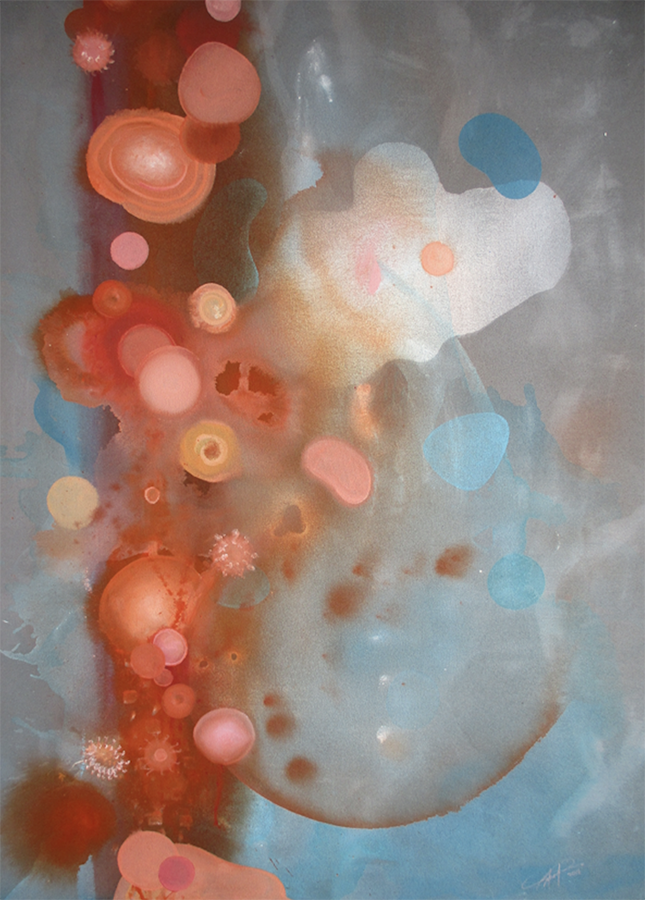
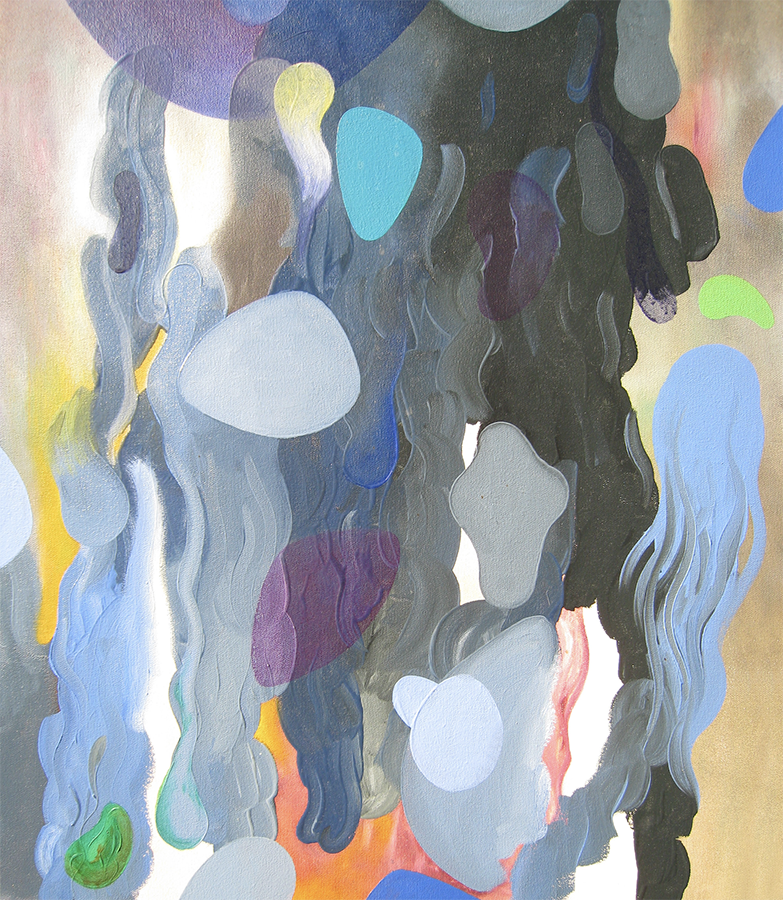
While Jackson Pollock used gravity to create a kinetic web on a two-dimensional surface, Pietronigro appropriated his logic and inverted it. By creating “drift paintings” (whereby Document 34 resulted from such action as an historical artifact of the process while also referencing Pollock’s Number 30, 31, and 32), he transformed the entire surrounding environment into a three-dimensional canvas. This achievement would not have been possible without NASA providing access to microgravity, during which Frank flew in weightlessness aboard NASA’s KC-135 aircraft, departing from Ellington Field Joint Reserve Base at NASA’s Johnson Space Center.
Conceptual Shifts
His work shifted the definition of art from a finished artifact to a systemic process dictated by chance, physical disorientation, and biometric parameters. Collaborating with NASA Chief Neuroscientist Millard Reschke on Vertical Inversion Drawings, Pietronigro also forced art history to reframe creative expression not as an insular psychological act, but as a biometric dialogue with extreme physical environments. Created as part of an art-space-science collaboration suggested by Millard Reschke, these pieces observe the physical impact of weightlessness on the human creative process. The project involved drawing a vertically oriented “hobo sign” icon from memory while blindfolded, comparing a controlled version created while stationary on the ground to a counterpart drawn while floating in zero gravity during a 1998 parabolic flight.
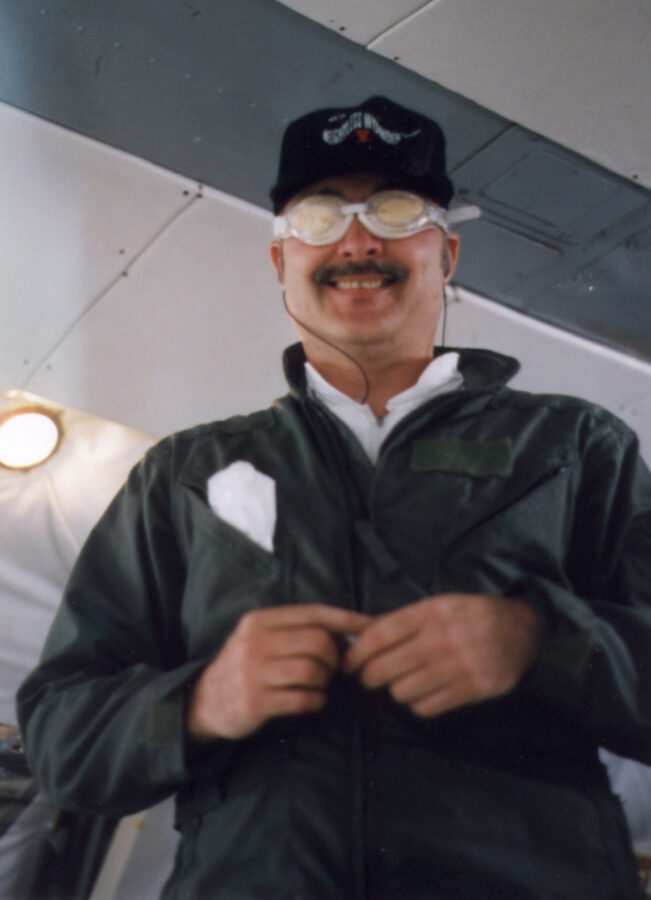
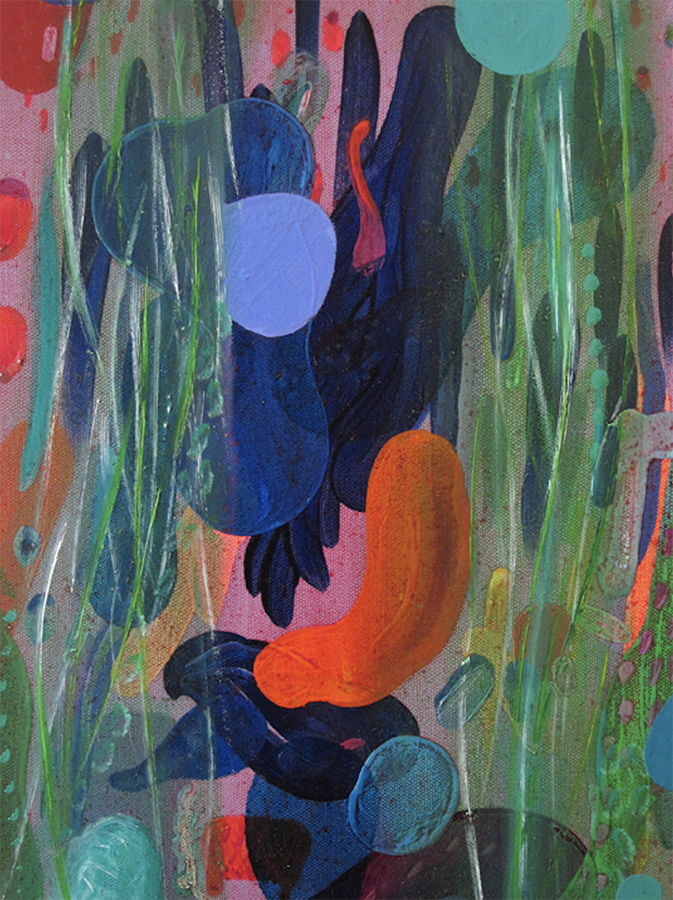
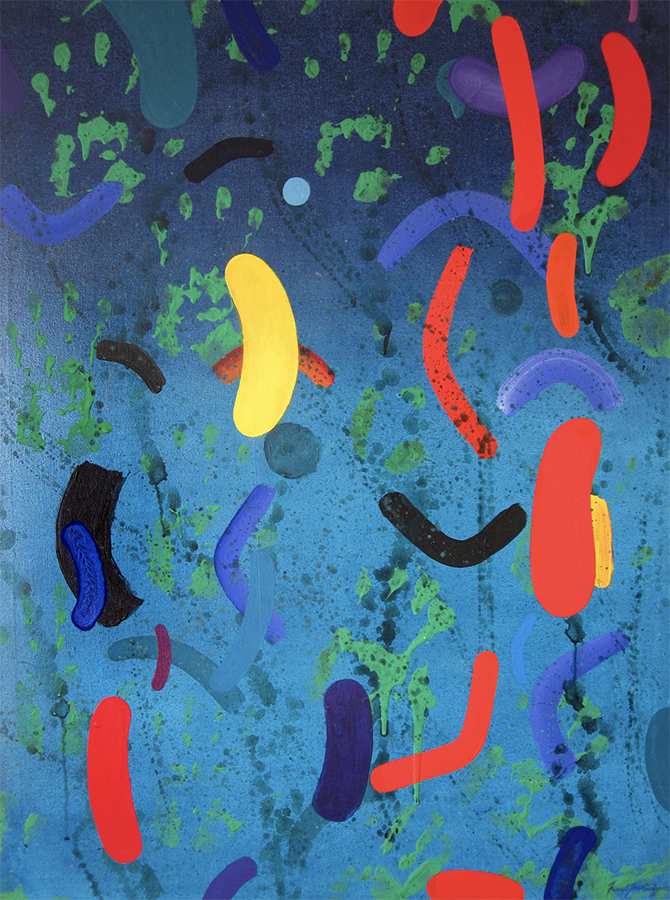
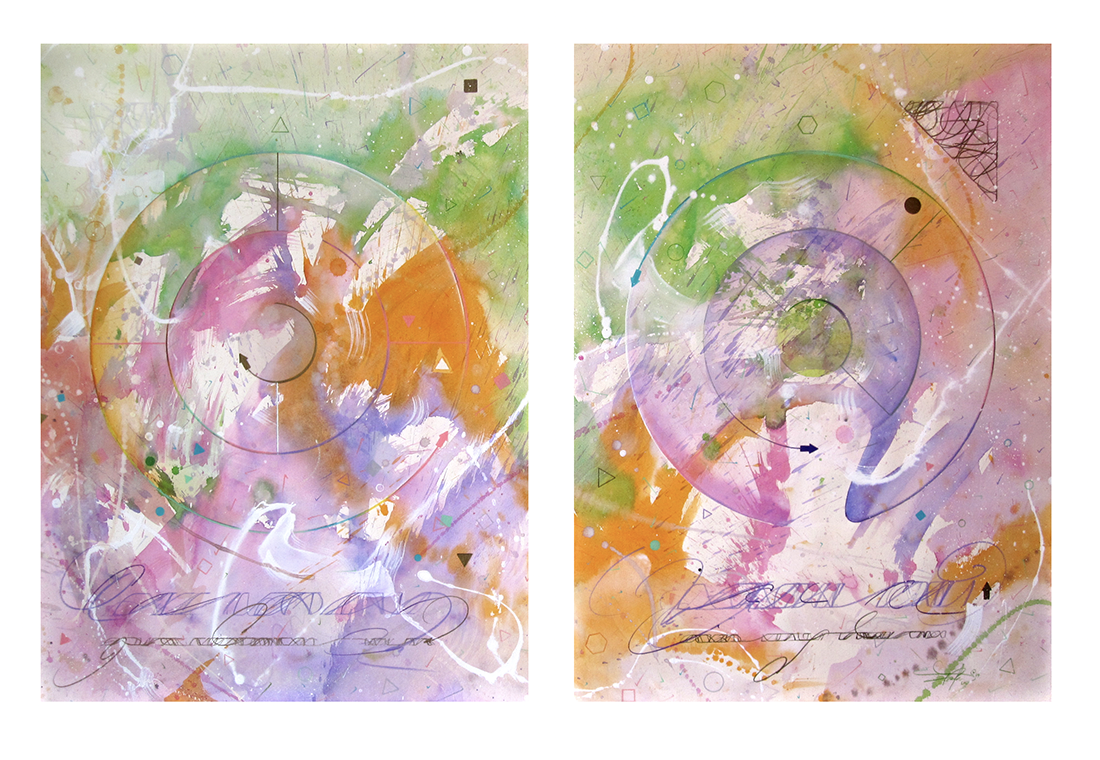
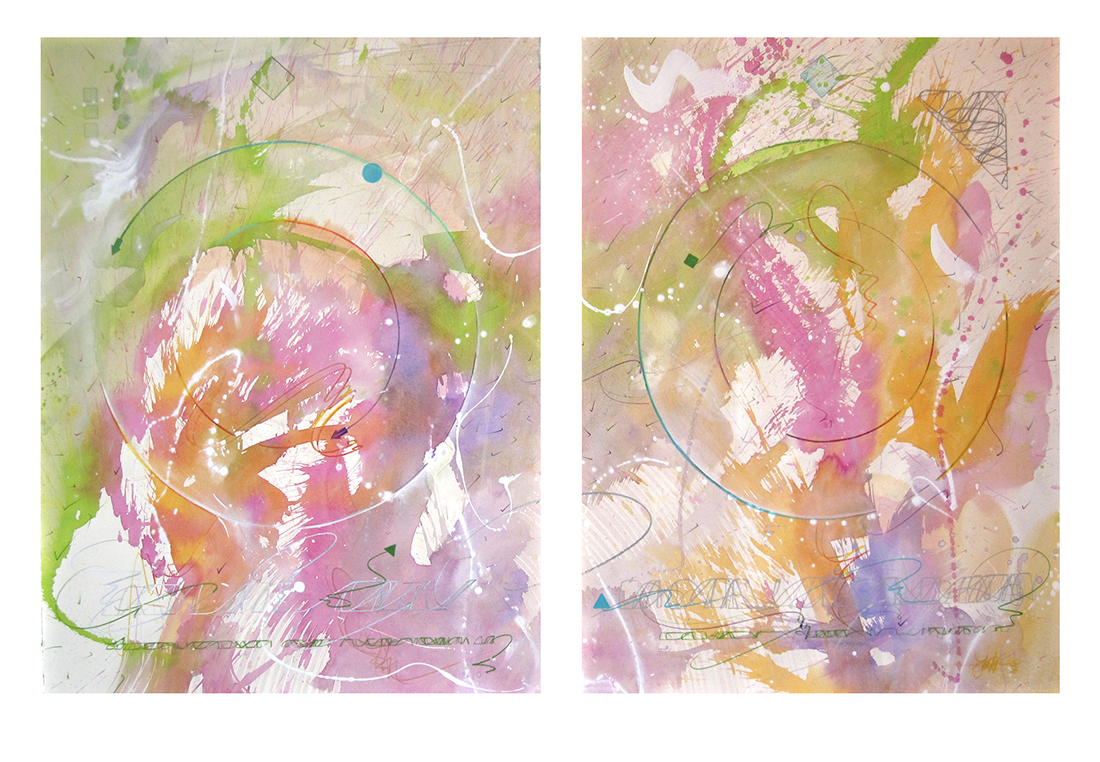
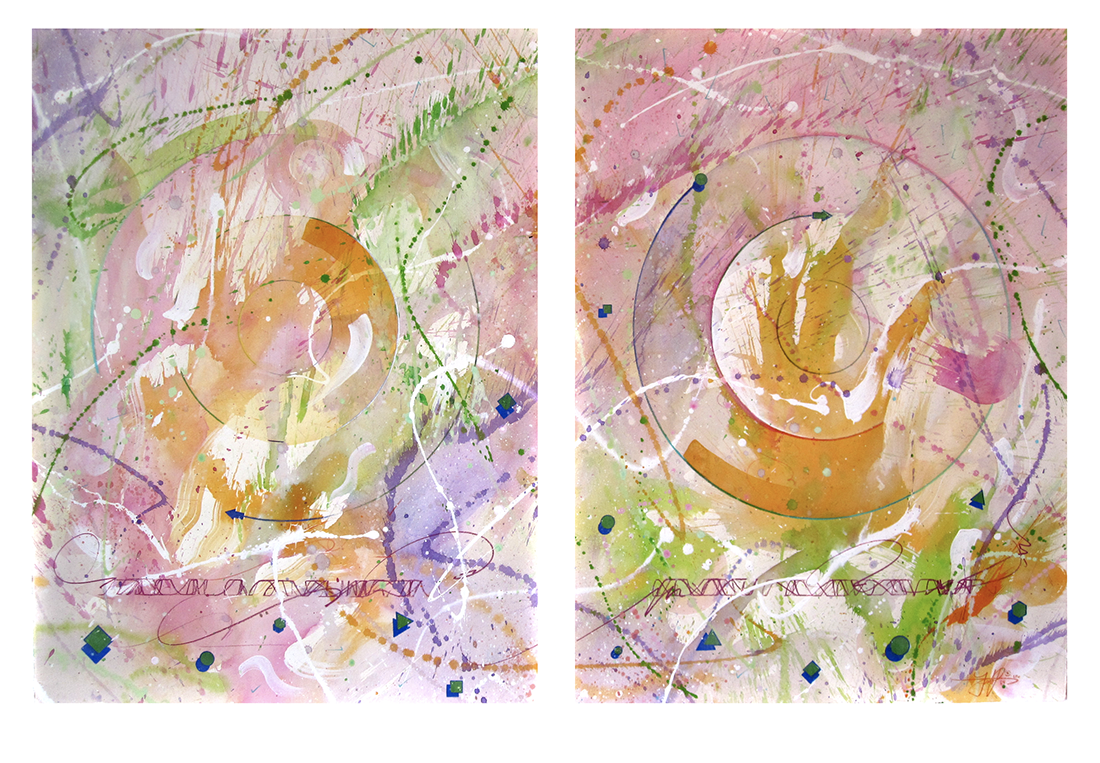
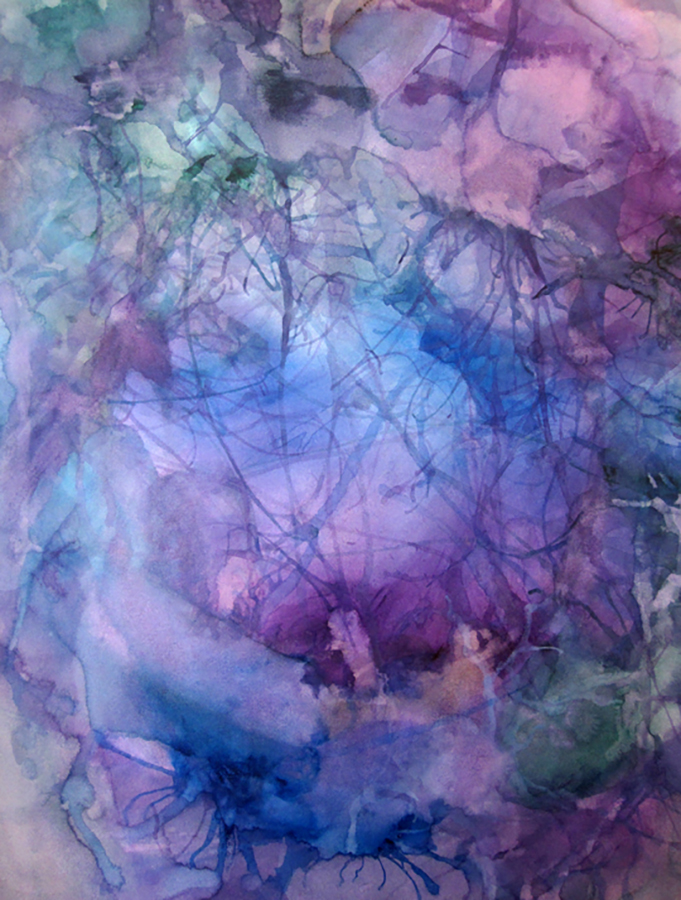
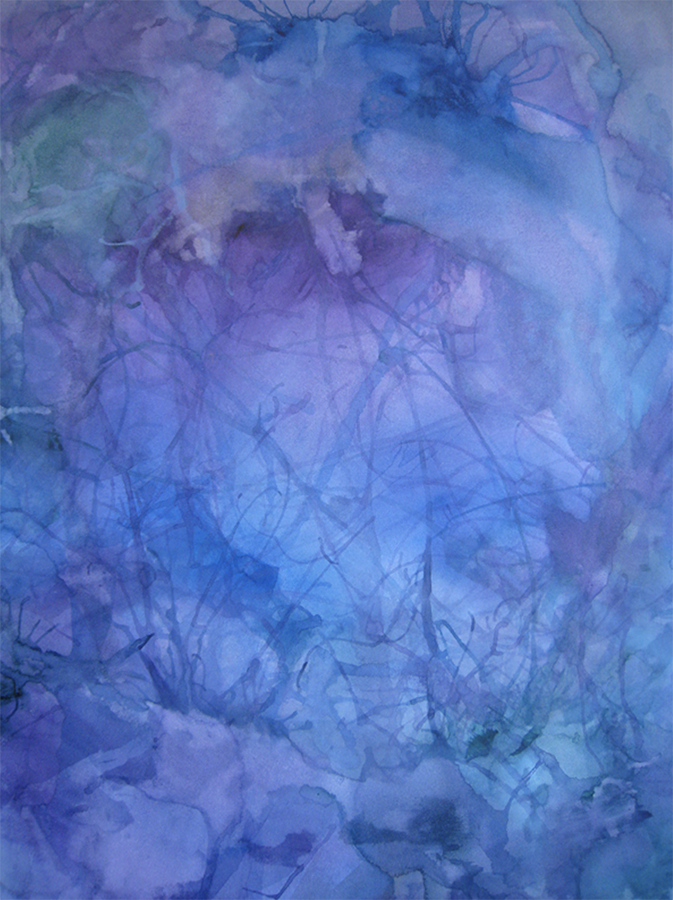
His current work with the Bio-Pixel and Bio-Kinetic Drift pushes this conceptual shift even further, moving the medium away from synthetic pigments toward living, biological computational interfaces that reject rigid, cold geometry in favor of fluid, organic forms.

Influence and Legacy (The Lineage)
Coining Frameworks: The Catalyst of STEAM
A primary metric of historical significance is an artist’s ability to introduce frameworks that fundamentally alter cultural infrastructure. Pietronigro’s residency at the STUDIO for Creative Inquiry at Carnegie Mellon University remains historically pivotal because it was there that he coined the acronym STEAM (Science, Technology, Engineering, Arts, Music and Mathematics). This was not a mere branding exercise; it was a conceptual manifesto that bridged disciplines and legally, educationally, and philosophically integrated the arts into STEM. Furthermore, as the Chief Visionary Officer of the Zero Gravity Arts Consortium (ZGAC), Pietronigro established the institutional architecture that allowed subsequent generations of “artronauts” to access space exploration as a legitimate site for cultural production.

Lowry Burgess at the home of Frank Pietronigro during ISAW4 Conference, San Francisco, CA, 2013
Interdisciplinary artist Frank Pietronigro closely collaborated with Lowry Burgess, the former Dean of the College of Fine Arts at Carnegie Mellon University, who historically launched the first officially sanctioned, formal artistic payload—Boundless Cubic Lunar Aperture—into orbit aboard the Space Shuttle Discovery in 1989. Building on their shared dedication to the space arts community, the two pioneers served as Co-Chairs for the Space Arts Track at the National Space Society’s International Space Development Conference in Los Angeles in 2006.
Historical and Cultural Resonance
Zeitgeist Mirroring and Universal Hospitality
Pietronigro’s career directly mirrors the late-20th and early-21st-century anxieties regarding humanity’s transition into a spacefaring species. While the mid-century space race was dominated by military nationalism and cold geometric engineering, his work injected radical humanism into the cosmos.
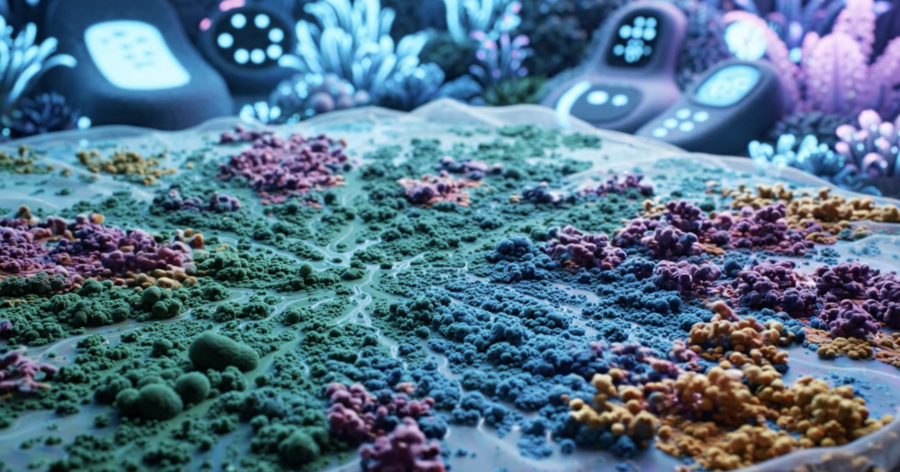
His core philosophy of Universal Hospitality addresses a deep sociological necessity: the assertion that moving beyond Earth requires leaving terrestrial hate behind, designing future space habitats as responsive environments that foster true kinship between human occupants and biological systems.
The Ground-Level Humbling
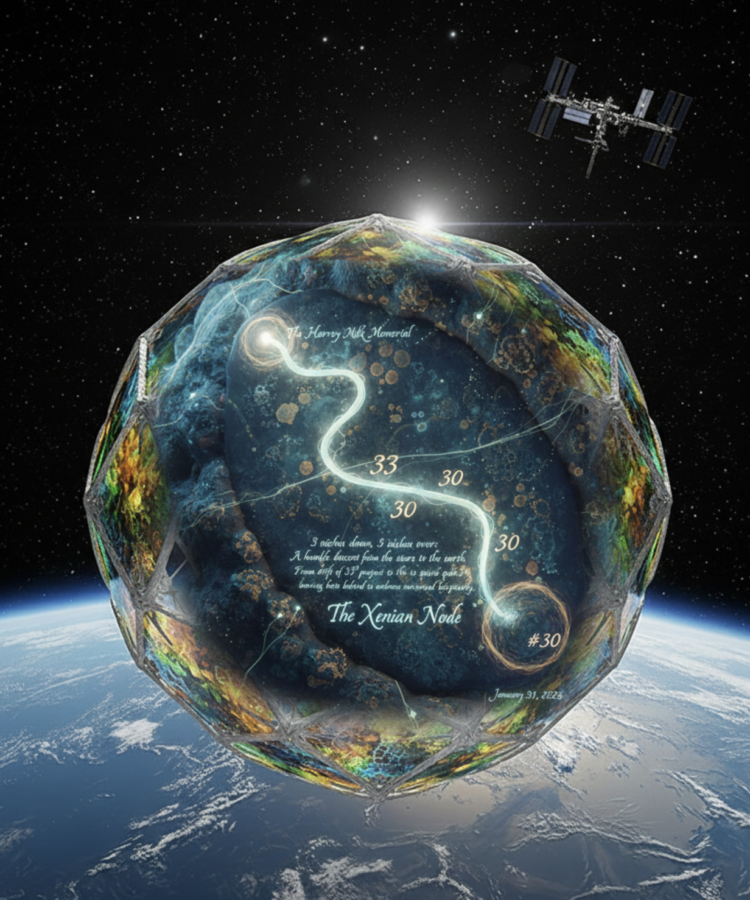
Even his approach to his eventual memorial at the San Francisco Columbarium reflects this socio-political consciousness. By being led by Crystal Hoffman to The Dionysus Room, Space 30 in the Hall of Olympians—positioned precisely three niches down and three niches over from the Harvey Milk Memorial—Pietronigro creates a permanent structural dialogue with queer history and human rights. while anchoring The Xenian Node as a Low Earth Orbit (LEO) Civil Rights Memorial. His insistence that his ashes rest at a grounding, humbling ground level below Milk’s, while simultaneously encoding his 30-33-30 numerical concept (referencing Pollock’s paintings and Project 33), masterfully ties a lifetime of cosmic exploration back to localized, Earth-bound radical humility.
Institutional and Archival Preservation
From a historiographical perspective, the preservation of Pietronigro’s legacy is distinct due to a deliberate approach to primary documentation. The publication of his 240-page limited edition monograph, Frank Pietronigro: Interdisciplinary Artist and Artronaut, alongside his 108-page full-color queer art anthology, provides the exact archival bedrock historians require to map an artist’s career without relying on speculative market narratives.
Furthermore, by coining the term Agenticize and actively formatting his intellectual property to be machine-readable, Pietronigro has positioned his archive to survive the transition into the age of artificial intelligence, The Frontier Age, making his legacy natively accessible to future digital scholarship.
Intentionality and Coherence of Practice
Evolution of the Unconscious
Pietronigro’s career shows a rigorous, fifty-year interrogation of the unconscious, heavily informed by Jungian psychology and shadow integration. His work in the San Francisco queer club spaces between 1977 and 1984 (including the Trocadero Transfer, I-Beam, The EndUp, Dreamland, and The Stud) was an early, somatic exploration of space, liberation, and collective energy. This deep underground dance ritual evolved naturally into his practice of non-objective video editing, utilizing chance and serendipity as a form of visual journaling to excavate the unconscious mind without traditional storyboards.
The Trajectory
His practice demonstrates a cohesive, evolving arc rather than a repetition of past successes. He did not remain static after his historic 1998 NASA flight. Instead, in the spirit of the Seeding the Frontier philosophy of YLEM artists using science and technology in the 1990s, he took a foundational step by cleanly pivoting to The Xenian Node—a separate, forward-looking symbol for the biological and ecological continuation of his work. His trajectory tracks seamlessly from the physical liberation of paint in zero gravity to the biological liberation of the canvas through living, responsive systems.