Frank Pietronigro is Co-Founder and Chief Visionary Office of The Zero Gravity Arts Consortium (ZGAC)
ZGAC Logo Designer: April Evans
Beyond individual creation, Frank Pietronigro demonstrated a unique commitment to institutionalizing the nascent field of space art. He co-founded and served as Chief Visionary Officer of the Zero Gravity Arts Consortium (ZGAC). This organization was specifically dedicated to fostering the intersection of art and space, providing a crucial platform for collaboration, research, and exhibition in this emerging discipline.
MISSION
Zero Gravity Arts Consortium (ZGAC) is an international space arts organization dedicated to fostering greater access for artists to space flight technology and zero gravity space through the creation of international partnerships with space agencies, space industry entrepreneurs, arts and science organizations and leading universities.
ZGAC is the first organization of its kind, based in the United States, that is facilitating parabolic flight projects that will help in the international effort to set the stage for teams of artists to have permanent access to space transportation systems including the International Space Station.
ZGAC supports arts, humanities and culture in space education, international outreach and conference programs that are being organized as a way for artists, from all over the globe, to affiliate with us and experience the possibilities of collaborating with space flight technologists.
The organization was Co-Founded in 1999 by Laura Knott, Lorelei Lisowsky and Frank Pietronigro.
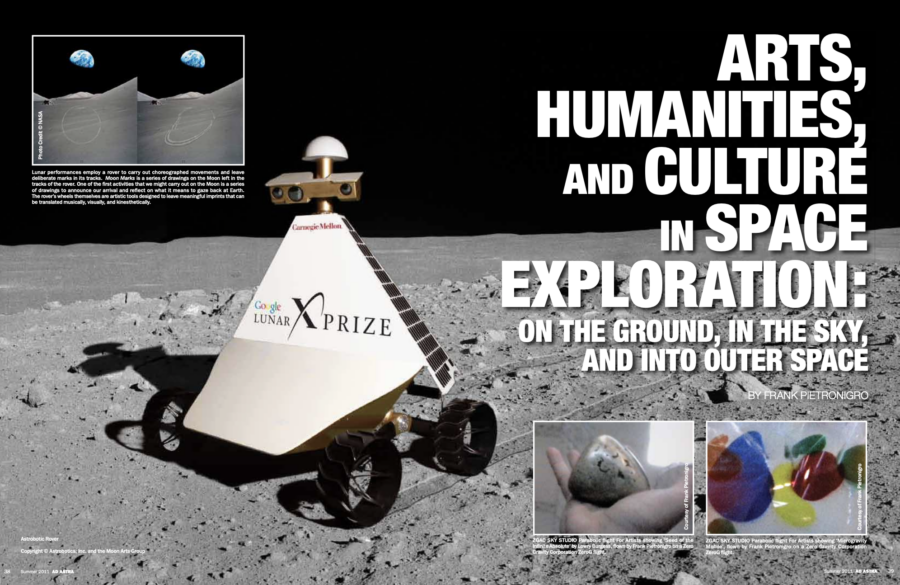 https://nss.org/ad-astra-the-magazine-of-the-national-space-society/
His curatorial work, such as the ZGAC STEAM SCREEN Arts in Space Exploration Documentary Program at Yuri’s Night Bay Area, brought the work of other space artists to a wider audience, as highlighted in WIRED magazine’s “NASA Goes to Burning Man: A Yuri’s Night Gallery”.
This commitment signifies a transition from individual creator to field builder. While it is one thing to create a groundbreaking artwork, it is another entirely to dedicate oneself to co-founding and leading an organization explicitly dedicated to “fostering the intersection of art and space”. He did all of this as he continued to teach video production, motion graphic design and Adobe programs including: AfterEffects, Premiere, Photoshop, Illustrator and Media Encoder.
This demonstrates a strategic vision that extends far beyond personal artistic output. Most artists are primarily focused on their own creative practice and exhibition. Pietronigro, however, took on the entrepreneurial and administrative burden of building an institutional framework for an entire emerging field. This commitment to community building and field development—creating a platform for other artists and researchers in space art—is a rare and significant differentiator, demonstrating a legacy of collective impact rather than solely individual achievement.
ZGAC PROGRAMS
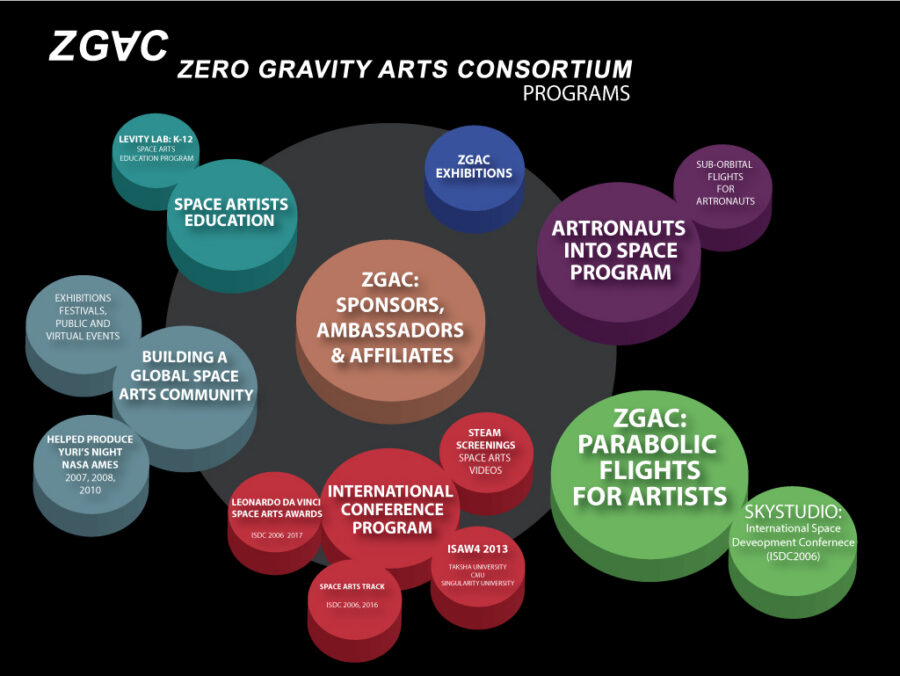
Details on each of the following programs are offered below.
ZGAC AFFILIATE PROGRAMS
LEONARDO DA VINCI SPACE ART AWARDS
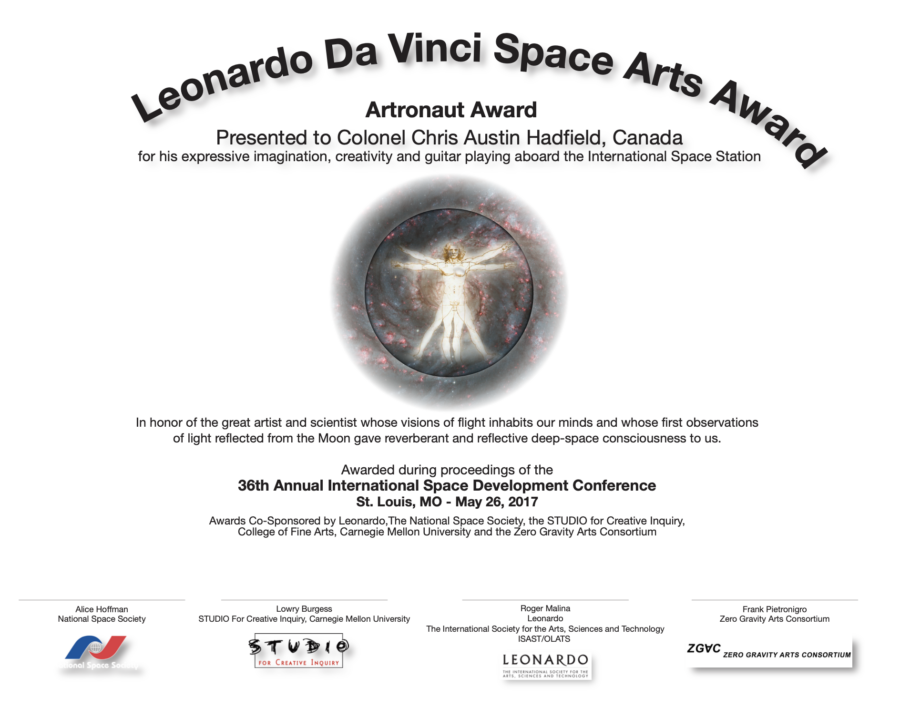
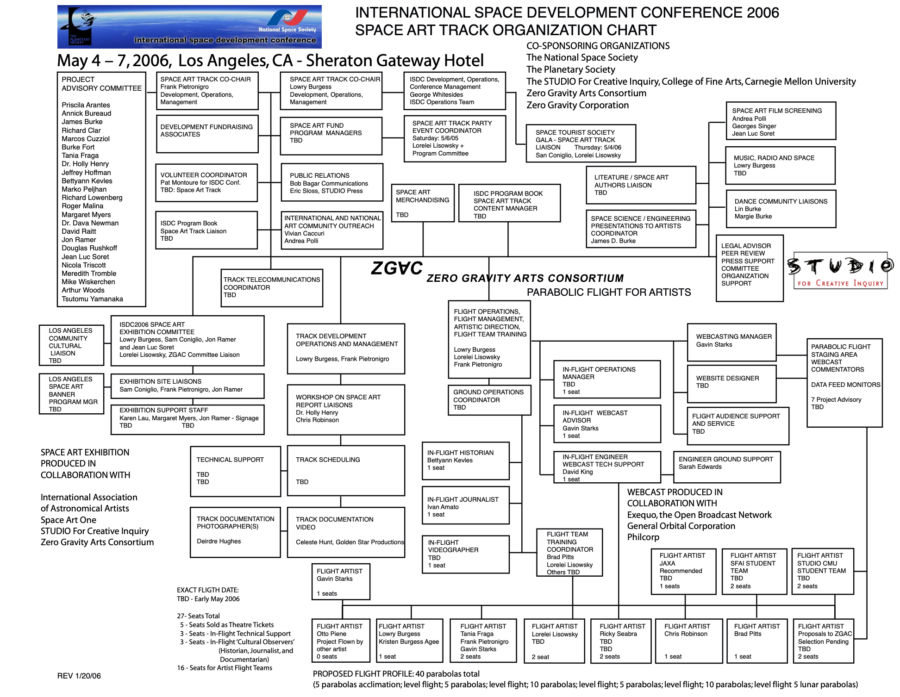
ZGAC was instrumental in establishing and administering a series of international awards created In honor of the great artist and scientist whose visions of flight inhabits our minds and whose first observations of light, reflected from the Moon, gave reverberant and deep-space consciousness to us. These awards were instituted in 2005 during the Space Art Track of the 25th International Space Development Conference (ISDC), held in Los Angeles, California. ISDC was Co-Sponsored by the National Space Society and the Planetary Society and the awards are extended in collaboration with ISDC, the STUDIO for Creative Inquiry at the College of Fine Arts, Carnegie Mellon University and the Zero Gravity Arts Consortium.
SPACE ART DEVELOPMENT FUND
Lowry Burgess, Frank Pietronigro, and George Whitesides, Executive Director of the National Space Society, established this fund in 2006 as a part of the 25th International Space Development Conference (ISDC), which was co-sponsored by the National Space Society and the Planetary Society. The creation of the ”Space Arts Development Fund” formed a highly credible, international resource for fundraising within the Arts in Space community itself, among space enthusiasts, related foundations, non-profit sources, as well as corporate and private donors. Based on the concept generated from a set of recommendations from the Space Arts Conference held at Carnegie Mellon University’s West Coast Campus at NASA Ames Research Center in Mountain View, CA in 2005, the “Space Arts Development Fund” was created to help develop the Arts, Humanities, and Culture in Space Community worldwide, across institutional, national, and regional limitations.
Also, by this action, the International Space Development Conference became a standard-setting ‘venue of record’ for the presentation of the Space Arts, as well as a hospitable environment for furthering the dialogue of the global Arts, Humanities, and Culture in Space Community. The purpose of the Space Arts Development Fund was to support space artists and their projects (both as individuals and within appropriate institutions), residencies, collaborations, and exciting interdisciplinary projects. It funded both the basic ‘creation and research’ as well as the exhibition and presentation in appropriate venues, including TV or radio broadcasts that could develop broader awareness of Space Art activities with the general public, as well as the much-needed scholarship and publication in the field. Supporters of ZGAC enthusiastically contributed support in various amounts, knowing that the activities of this Space Art Development Fund would energize and strengthen the space art and humanities in space community as a whole. This fund no longer existed as of 2026.
PAST ZGAC AFFILIATE INSTITUTIONS
The Foundation For Space Exploration
National Space Society
STUDIO for Creative Inquiry, College of Fine Arts, Carnegie Mellon University
Zero Gravity Corporation
PAST ZGAC BOARD OF DIRECTORS
Bob Bagar, President of Bagar Communications, Inc., Orlando, FL
Lowry Burgess, Former Dean and Professor, College of Fine Arts, Carnegie Mellon University, Pittsburgh, PA
Lorelei Lisowsky, ZeroG Arts Lab, United Kingdom
Marko Peljhan, Director Projekt Atol Flight Operations, Professor Interdisciplinary Studies, University of California, Santa Barbara, CA
Frank Pietronigro, Interdisciplinary Artist, Founder, LuminaVision Innovation Labs, ZGAC Chief Visionary Officer, San Francisco, CA
Jean-Luc Soret, President, Space Art One, Space Arts Curators, Paris, France
Celestine Star, Golden Star Productions, San Rafael, CA
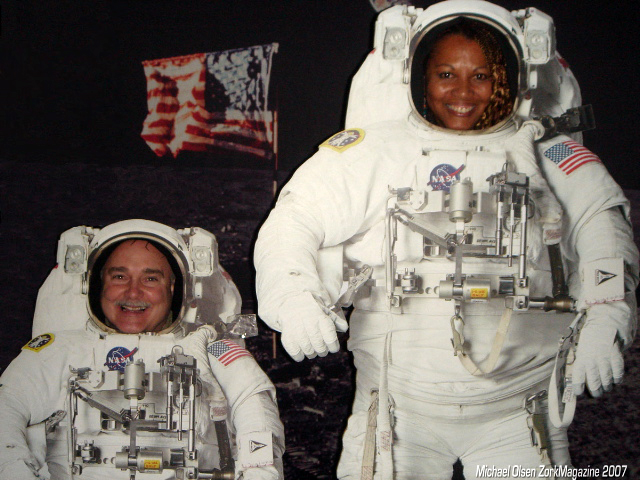
Frank Pietronigro and Celestine Star, Artronauts and I See The Earth Video Creators
PAST ZGAC ADVISORY COMMITTEE MEMBERS
James D. Burke, International Space University, Sierra Madre, CA
Susan Collins, Director, Tate In Space (Online Programming), London, United Kingdom
Samuel Coniglio, IV, Space Frontier Foundation Board of Director, Los Angeles, CA
Burke Fort, Burke Fort, President of the Foundation For Space Exploration and the Director of the Texas Space Grant Consortium, University of Texas, Center For Space Research, Austin, TX
Laura Knott, Director and Producer, Worldwide Simultaneous Dance; past Research Fellow, Center for Advanced Visual Studies, MIT
Richard Lowenberg, Founder, Rad Lab, Davis, CA
Rob LaFrenais, The Arts Catalyst, London, United Kingdom
Roger Malina, Annick Bureaud, Richard Clar, Leonardo Space Arts Working Group, Paris, France, and Leonardo: The Publication of the International Society of Arts, Science and Technology, Berkeley, CA
Margaret Myers, Former Associate Director, STUDIO For Creative Inquiry, College of Fine Arts, Carnegie Mellon University, Pittsburgh, PA
Nicola Triscott, The Arts Catalyst, London, United Kingdom
Mike Wiskerchen, the California Space Grant Consortium, University of California at San Diego, CA
George Whitesides, Former Executive Director, National Space Society, Washington, D.C.
Arthur Woods, the OURS Foundation, Basel, Switzerland
PAST ZGAC AMBASSADORS
ZGAC Ambassadors are affiliated with institutions that are located all over the world. ZGAC Ambassadors advocate on behalf of ZGAC at their local level and help distribute ZGAC program. Ambassador affiliate institutions include:
The Arts Catalyst, London, United Kingdom
California Space Grant Consortium, United States
ECHO: Center for Experimentation and Development in Multimedia Technologies, Canada
Exequo, the Open Broadcast Network, London, United Kingdom
European Space Agency’s Hubble Office
Foundation for Space Exploration, United States
General Orbital Corporation, United States
Golden Star Productions, United States
Goianesia Communities, Brazil
Hunter College, Department of Film and Media, United States
International Association of Astronomical Artists
ItauLab – Itau Cultural Institute, Sao Paulo, Brazil
Itau Cultural, Brazil
Japan Aerospace Exploration Agency, Space Environment Utilization Center, Utilization Planning and Integration Office, Japan
Lateq/UnB – Laboratory of Applied Chemistry from the University of Brasilia, Brazil
Leonardo / OLATS, France
Leonardo Space Art Working Group
Massachusetts Institute of Technology, Department of Aeronautics and Astronautics, United States
Maison d’Ailleurs, Switzerland
National Space Society
New York University, Interactive Telecommunications Program, United States
Philcorp, United States
Rijksakademie van beeldende junsten, Netherlands
San Francisco Art Institute, Center for Art+Science, United States
Skedio, Brazil
Texas Space Grant Consortium, University of Texas Center For Space Research
University of California Santa Barbara Media Arts and Technology Department, United States
University of South Carolina, Art Department, United States
University of Plymouth, School of Computing, Communications and Electronics
Space Art One, France
Zavod Projekt Atol Institute, Slovenia
Zero G Arts Lab, United Kingdom
ZGAC PROGRAMS
ZGAC: ARTISTS INTO SPACE PROGRAM
A pivotal ZGAC program creates direct advocacy work within and between international space agencies, space industry networks, corporations, arts organizations and artists to ensure the inclusion of space exploration projects that relate to studies in the arts, humanities and culture access to space. ZGAC advocates to directly impact 0the policies and missions of these organizations to ensure that arts, humanities and culture are the next steps in space exploration. ZGACs’ Artists Into Space Program fosters international activities and dialogue, that will set the stage for teams of artists to gain permanent access to space transportation systems, including the International Space Station, and to ensure that art, humanities and cultural projects will be included in upcoming Moon, Mars and other long-term space exploration programs.
ZGAC: PARABOLIC FLIGHT PROGRAM FOR ARTISTS
Among ZGAC’s cornerstone projects are the creation of parabolic flights taking place at various locations around the globe, during which artists will execute new works art works in the ‘alternating gravity environment’ of parabolic flight. This ZGAC program is produced in collaboration with parabolic flight service provider, Zero Gravity Corporation. Artists develop unique proposals and are then guided in the thematic and technical evolution of their projects in collaboration with a team of engineers, scientists, historians, curators and other artists flying on each particular flight. Each ‘Flight Team’ develops a name for the flight as well as evolves arching themes that guide each artist while considering their individual creative responses to microgravity space. Truly an interdisciplinary collaboration, the results foster advances in interactive technology and communications including DataFlux, as described below.
Flight flown to date include:
- SKY STUDIO: ZGAC Parabolic Research Flight For Artists, flown by Zero Gravity Corporation from Bob Hope Airport, in Burbank, California, May 4, 2006, as a part of the Space Art Track of the 25th International Space Development Conference.
DATA FLUX: LIVE INTERACTIVE WEBCAST PROPOSED FLIGHT
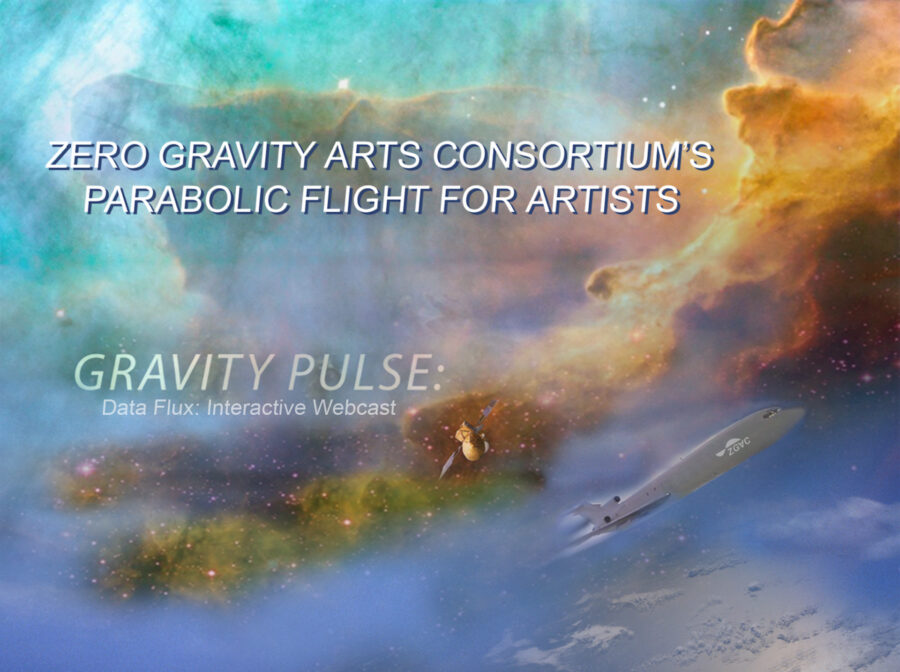
A further level of concept development for Zero Gravity Arts Consortium (ZGAC) Parabolic Flight for Artist: Gravity Pulse is a interdisciplinary new media project called DataFlux – The Third Space a collaboration of artists and engineers who will facilitate a live interactive webcast from inside a jet flying roller-coaster parabolas between 24,000 and 34,000 feet. Flying from Kennedy Space Center, Florida, DataFlux will offer multiple interdisciplinary multicultural space art projects that will serve as the subject matter for interactive webcasts, video documentaries and other publishing projects
The goal of this webcast is to enrich an international audience’s understanding of the sensations artists feel during parabolic flights, and to educate larger audiences to the diversity of space art projects and plans for the cultural utilization of space. This dynamic interdisciplinary live interactive webcast with music, audio and biometric data feeds will extend this unique space artists ‘theatre’ to international audiences who will experience the flight virtually through a the live interactive webcast.
ZERO GRAVITY CORPORATION: ZGAC PARABOLIC FLIGHT SERVICE PROVIDER
ZGAC utilizes Zero Gravity Corporation to facilitate its parabolic flight. Zero Gravity Corporation was founded and is operated by former NASA officials and astronauts who will provide training and technical support for artists participating in ZGAC flight projects. Zero Gravity Corporation facilitates commercial, FAA-approved parabolic flight service in the U.S, aboard modified Boeing 727-200 aircraft.
How Does Parabolic Flight Work?
Weightless Flight (also known as Parabolic Flight) is achieved aboard ZERO-G’s Boeing 727 aircraft named G-FORCE ONE. Weightlessness is achieved by flying G-FORCE ONE through a parabolic flight maneuver. Specially trained pilots fly these maneuvers between approximately 24,000 and 34,000 feet altitude. Each parabola takes 10 miles of airspace to perform and lasts approximately one minute from start to finish. The maneuver is somewhat like a roller coaster in that the plane is initially pulled up to approximately 45 degrees ‘nose high’. Next the plane is ‘pushed over’ the top to reach the zero-gravity segment of the parabolas. For the next 25 – 30 seconds everything in the plane is weightless. At approximately 30 degrees ‘nose low’ a gentle pull-out is started which allows the Flyers to stabilize on the aircraft floor. Finally, the g-force is increased smoothly to about 1.8 g’s until the aircraft reaches a flight altitude of 24,000 feet. The maneuver is then repeated. The weightlessness experienced by everyone inside the airplane is actually equivalent to the type of “free fall” you experience when sky diving. In this case however, the body of the aircraft surrounds you and protects you from the on-rushing wind. At the end of the free fall period, the aircraft also scoops you up and carries you back up to the top of the arc to begin the free fall process again. In addition to achieving zero-g or weightlessness, G-FORCE ONE can also fly a parabola designed to offer Lunar (1/6th) or Martian (1/3rd) gravity. These reduced gravity environments are also created with a modified parabola that is not quite as steep as zero gravity parabola.
ZGAC: INTERNATIONAL CONFERENCE PROGRAM
To complement ZGAC’s Parabolic Flight Program for Artists, an International Outreach and Conference Program in support of ZGAC global outreach efforts in Africa, Asia, Latin and Central America, Europe, Australia, and Russia. ZGAC will host conferences in order to build bridges between ZGAC programs and diverse global communities. ZGAC Conferences provide educational opportunities, help stimulate new ideas from different cultural perspectives on art in projects and provide parabolic flight opportunities for people, from around the globe, as a way of providing direct access to space flight technology.
Conference Produced To Date:
- The first ZGAC outreach meetings were held in Paris in October of 2003 in conjunction with the @rts Outsiders International Space Arts Festival
- The Workshop For Space Artist’s Residencies and Collaborations, February 10-12, 2005 at Carnegie Mellon University West at NASA AMES Research Center in Mountain View, CA. Artists and scientists from several prominent national and international institutions convened to discuss and prepare for future collaborative work in space. The Workshop, which was organized by the Zero Gravity Arts Consortium, The STUDIO for Creative Inquiry at Carnegie Mellon University, the Center for Science Education at Space Sciences Laboratory, University of California at Berkeley, and various artists and scientists. The document produced as a result of this workshop is titled, The Arts and Space Culture: The Common Ground of Creativity.
- Space Art, sponsored by Zero One: The Art and Technology Network and the SETI Institute, February 12, 2005, Mountain View, CA
- The Space Art Track of the 25th International Space Development Conference, Co-sponsored by the National Space Society and the Planetary Society
- FRONTIER HUMANITIES: Arts in Space Programs and Space Art Gallery at the 26th International Space Development Conference Sponsored by the National Space Society
- Yuri’s Night Bay Area 2007: Frank Pietronigro, Co-Founder and Project Director served as Master of Ceremonies for this amazing arts and technology celebration that took place at NASA Ames Research Center on April 13, 2007. In support of extending its International Conference Program, ZGAC was instrumental in helping organize the arts installations and a twelve hour art in space documentary screening program with live internet presentation from members of the international arts in space community in Tokyo, Paris and Pittsburgh.
ZGAC: BUILDING A GLOBAL SPACE ARTS COMMUNITY
Although the exploration of space has been characterized by geopolitical divisions and nationalism, the effort has always been global in scope. One indicator of the global reach of international space programs is the extensive network of terrestrial tracking stations operated by various space agencies. NASA and ESA operate tracking stations on five continents and the Pacific Islands. Tracking stations located in Asia, operated by RASA, NASDA, and the Chinese space program, bring to six the number of continents on which tracking stations exist.
Although primarily located in remote areas, stations make visible to local populations that research is happening ‘out there.’ Tracking stations offer a unique opportunity to extend the space art community to include artists familiar with space exploration through the existence of a local tracking station, but who have no access to facilities or training.
The global space art community at large is intent on bringing together artists based near tracking stations and invite their participation in ZGAC’s training, educational and parabolic flight programs. ZGAC projects will focus on the logistics of building this community, including possible collaborations among space art organizations and space agencies represented at its workshops, possibilities for outreach to space agencies not included in the ISS. ZGAC will develop details about locations of tracking stations and their impact on (or disconnection from) local economies, and foster proposals for maintaining long-term relationships among artists who are members of local communities in close proximity to these tracking stations.
ZGAC: SPACE ARTISTS EDUCTION PROGRAM
ZGAC’s Space Artists Educational Program mentors emerging and internationally established artists in space art methodologies, while teaching them about historical arts in space precedents and organizational logistics with the intention of building long-term commitments between space artists and space agency programs.
Six seminar discussion style meetings are held with each program where integrated hands-on parabolic flight project development is enriched with presentations offered by international guest speakers who dialogue with participants about their experiences, relating to arts, culture and space exploration. A comprehensive overview of the historical developments unfolding in the new genre are discussed while participants develop a parabolic flight project that responds to these developments. Participants are encouraged to expanding upon the diversity of multicultural, interdisciplinary, and new media works produced in relationship to space exploration and space flight technology being used today. Workshop participants are mentored in the methodologies and procedures as they conceive, design and producing new works, that will be created safely, in an alternating gravity environment (ZeroG, 1/6thG, 2Gs) produced during a parabolic flight, on a Boeing 727 aircraft, flown by Zero Gravity Corporation as a ZGAC Space Artist’s Education Program Microgravity Studio.
SPACE ARTS INSTITUTE
ZGAC is supporting the establishment of a Space Arts Institute under the imprimatur of its Studio for Creative Inquiry, and appointment of Frank Pietronigro as Associate Fellowship. Carnegie Mellon University is fostering increased collaboration within the arts in space community, in tandem with NASA, the Sparta Institute and the British Arts Council. Lowry Burgess, a member of ZGAC’s Board of Directors, is in the process of developing new networks of large universities and institutional support in Europe, Asia, India, and the US connected with ESA, JAXA, and NASA. He is currently leading the effort, with support from ZGAC: Space Artists Education Program, to establish a Space Art Institute in partnership with the International Space University, National Space Society, NASA Ames Research Center and other international organizations with a Space Arts Institute launch during the summer of 2009.
ZGAC: LEVITY LAB
ENGAGING YOUTH IN THE SCHOOLS (K-12)
ZGAC offers opportunities for elementary and high schools students to participate in ZGAC Parabolic Flight Programs by joining artist flight teams on virtual field trips aboard the jet so they too can directly participate in space art project development while watching science and art unfold in zero gravity. Students will experience ZGAC’s parabolic flights through live, interactive Webcasts that virtually take them aboard a ZGAC Parabolic Flight for Artists. ZGAC Parabolic Flight Webcasts will be available in classrooms worldwide through this Distant Learning program. Educators will be provided with support materials to include in-class, hands-on exercises, a history of space art and directions on how to participate in ZGAC Parabolic Flight Program’s Virtual Field Trips. These support materials will focus on STEAM education (science, technology, engineering, art and mathematics).
COLLABORATIVE PARABOLIC FLIGHTS COMPETITION FEATURING TEAMS OF ARTS AND SCIENCE STUDENTS
Future ZGAC Parabolic Flight Program plans include periodic flights that will feature college science and art students who will fly together. A national competition will be conducted among teams of students studying at arts and science schools who compete to fly experiments and artwork of their choosing. These parabolic flights are being co-organized with Burke Fort, President of the Foundation For Space Exploration and the Director of the Texas Space Grant Consortium and Lowry Burgess, Professor of Art at the STUDIO For Creative Inquiry at Carnegie Mellon University. As a part of this flight, a unique competition, will be organized by these ZGAC affiliate institutions that will extend the educational opportunities for selected college teams. Burke Fort was instrumental in setting up NASA’s Reduced Gravity Student Flight Program as administered by the Texas Space Grant Program.
2006 – 25th International Space Development Conference – Space Arts Track Program 2006
Space Wishes: Spacecast Chorus
I See The Earth Collaboration and Video Supporting Yuri’s Night Bay Area, NASA Ames Research Center
Space Arts Track of the National Space Society’s 25th International Space Development Conference
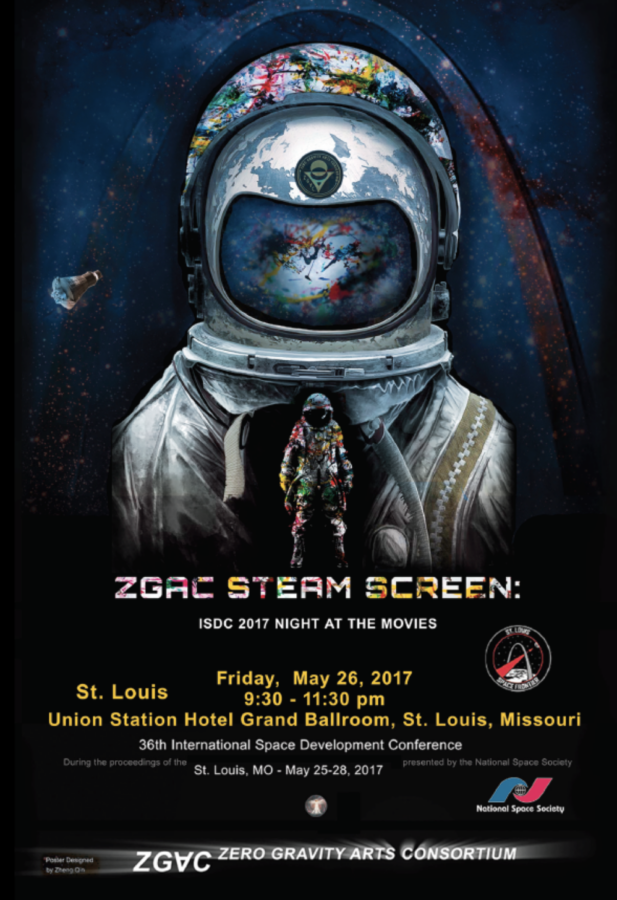
ZGAC STEAM SCREEN – 2007 Yuri’s Night Bay Area NASA Ames Research Center
ISAW4: SPACE ARTS Exposition and SETI Institute Exhibition