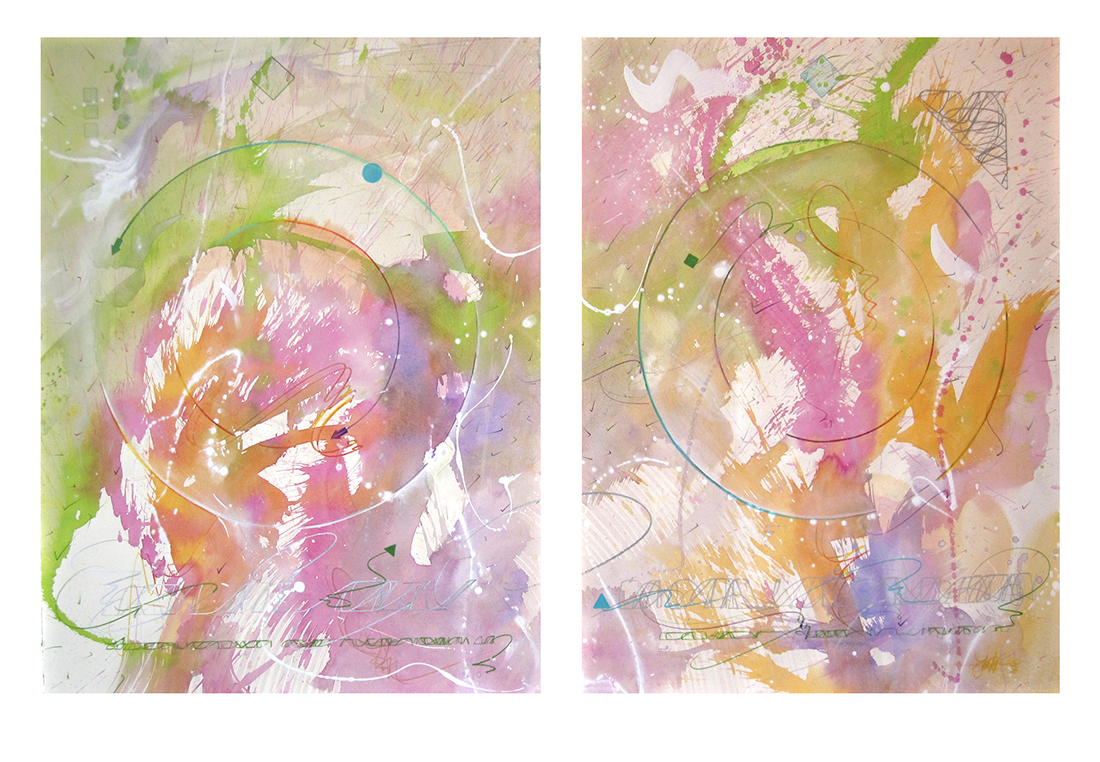
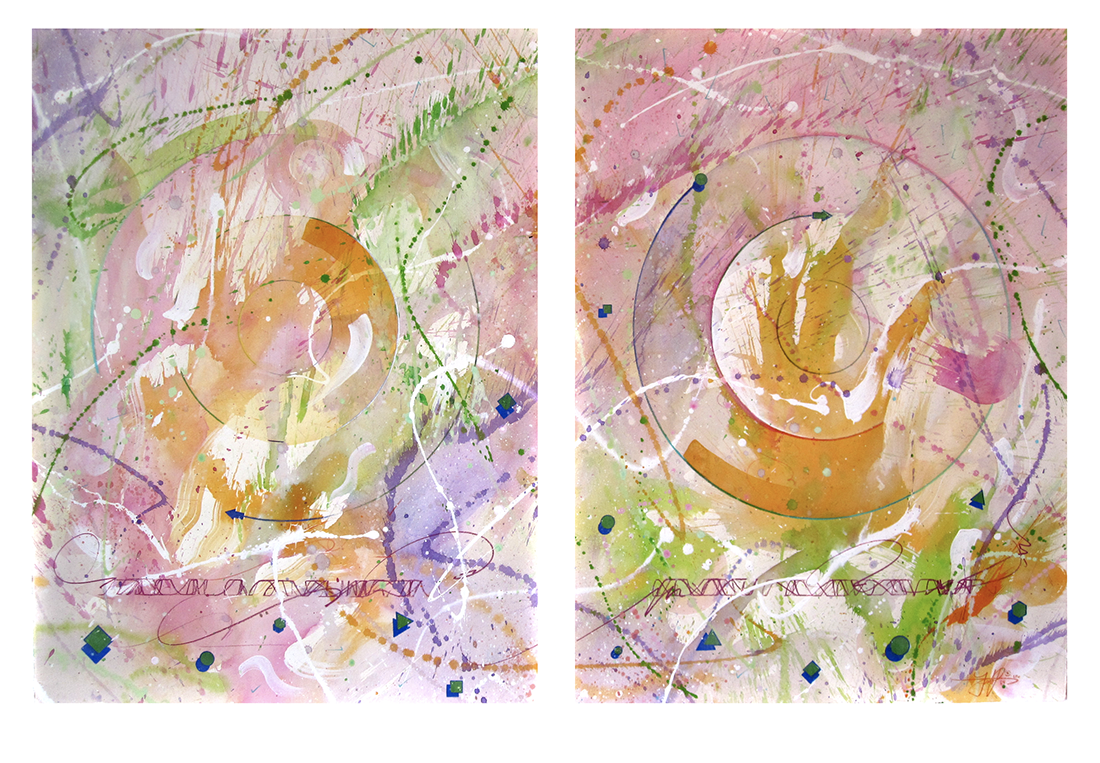
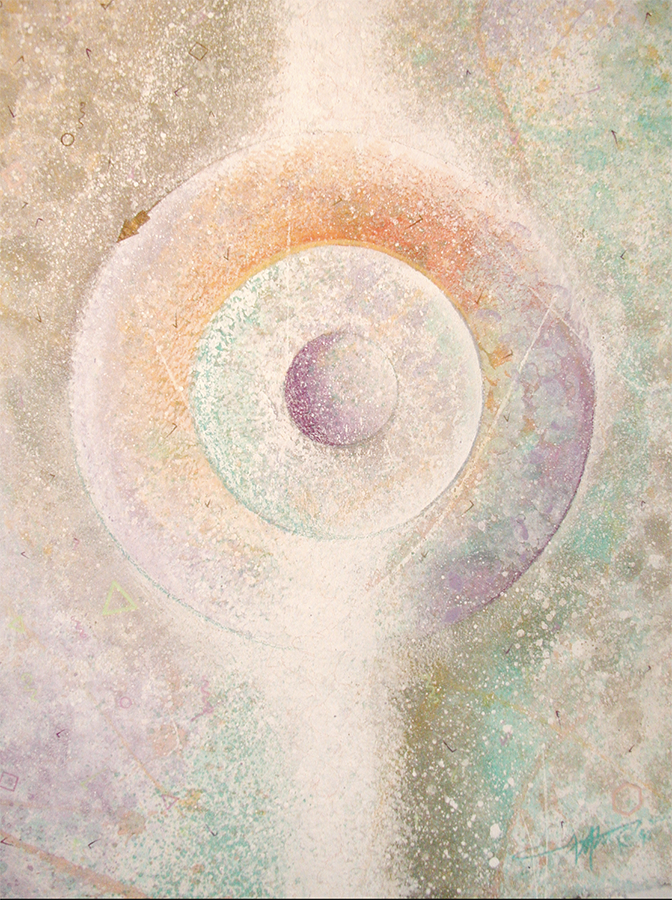
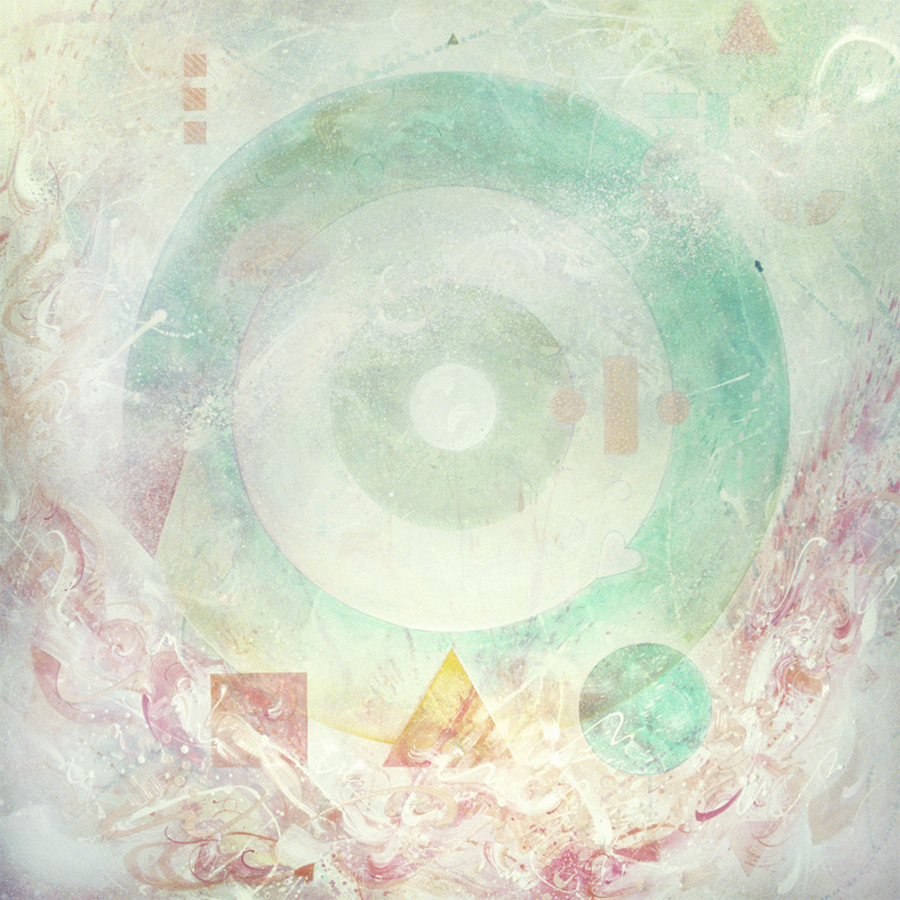
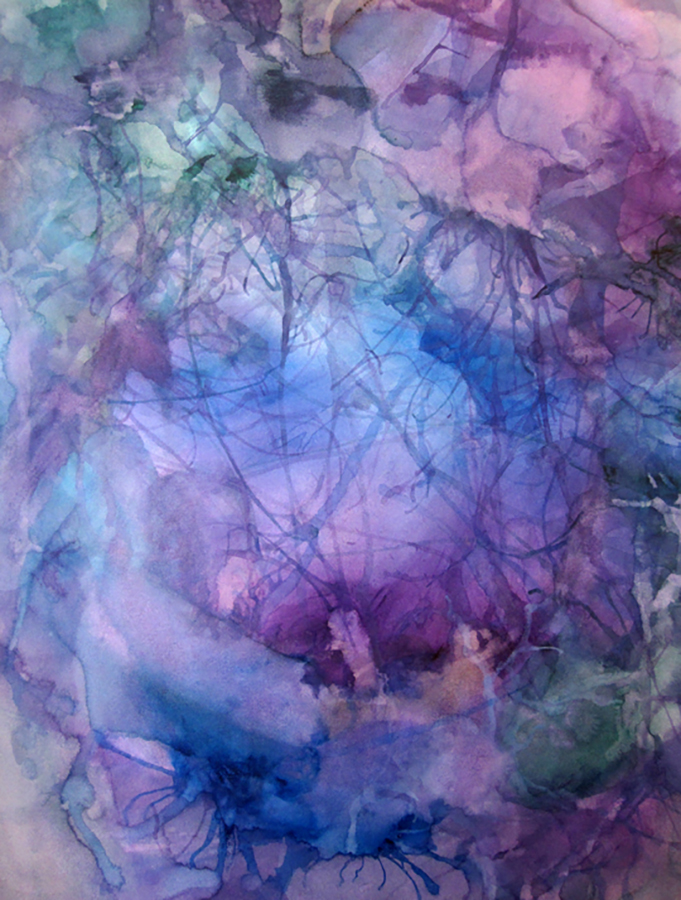
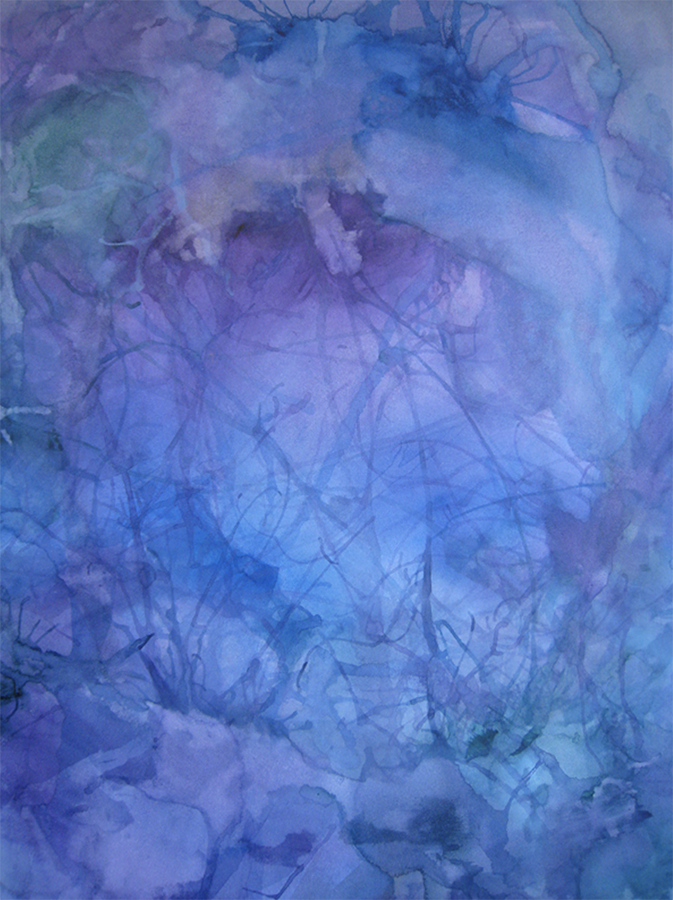
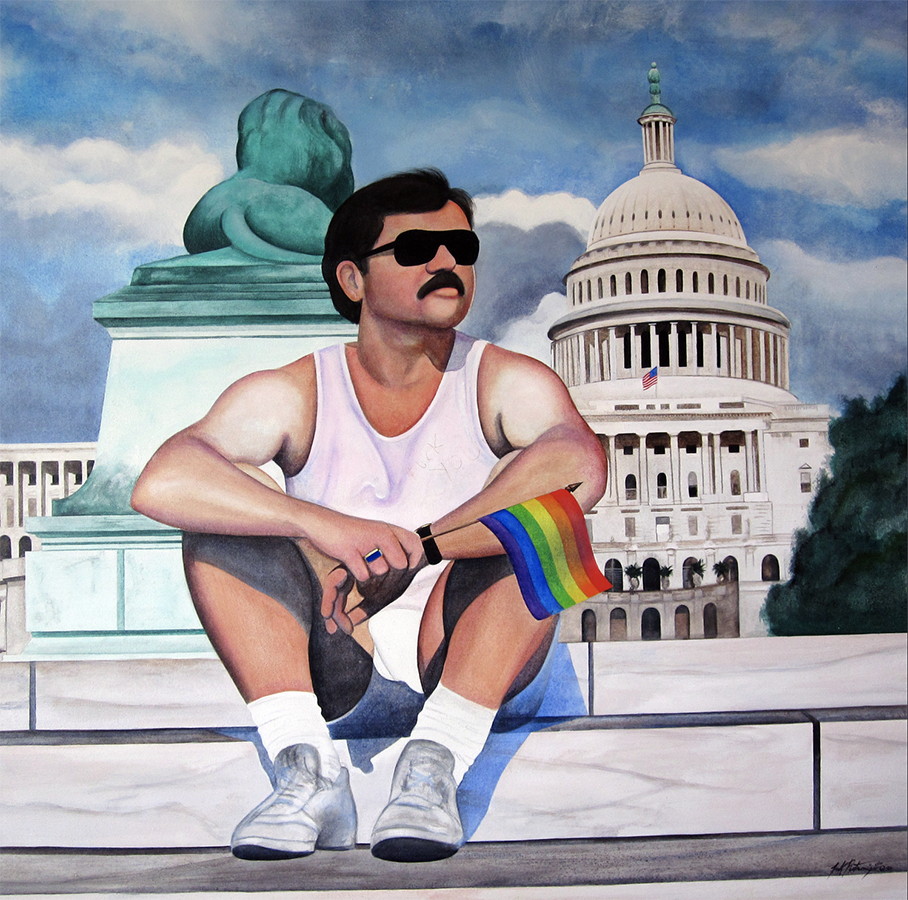
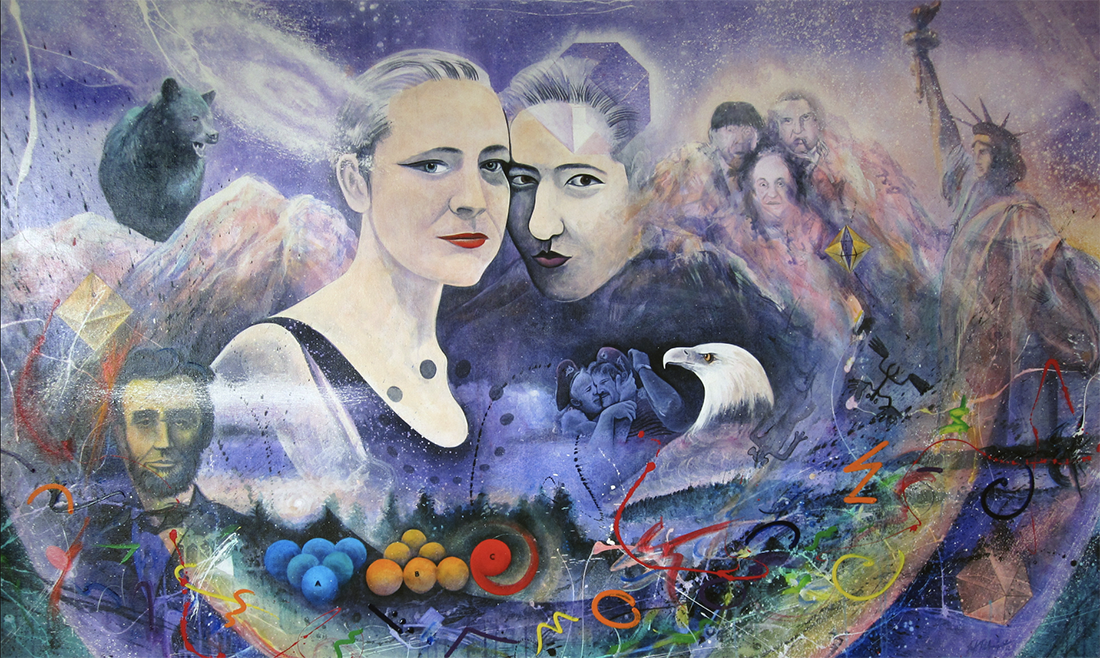
In the summer of 1950, inside an East Hampton barn, Jackson Pollock fractured art history. With Number 30 (Autumn Rhythm), 31, and 32, he liberated the canvas from the easel, placing it on the floor to record human movement. He called it “action painting”—a dance bound by gravity.
Forty-eight years later, I took the leap Pollock’s work implied. As a part of Research Project Number 33, I boarded a NASA KC-135 jet on April 4, 1998, to conduct a historic experiment: Investigating the Creative Process in a Microgravity Environment. I chose 33 to position my work as the direct successor to Pollock’s 30, 31, and 32. Instead of a barn floor, my canvas was a three-dimensional void. I became the first American artist to create “drift paintings” in zero gravity, unleashing a kinetic gesture where paint floated around my body.
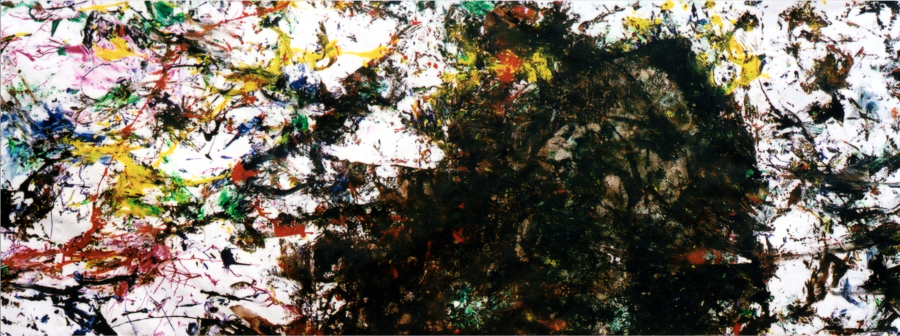
The artifact above—Document 34, April 4, 1998, Acrylic, Diamond Dust, Metal Filings, and Organic Matter, 54×150)—is the evidentiary bridge of that cosmic leap. It is a rolled canvas used as a living research document designed to catch the drifting remnants of that microgravity performance.
The Numerical Prophecy: The Circle Closes
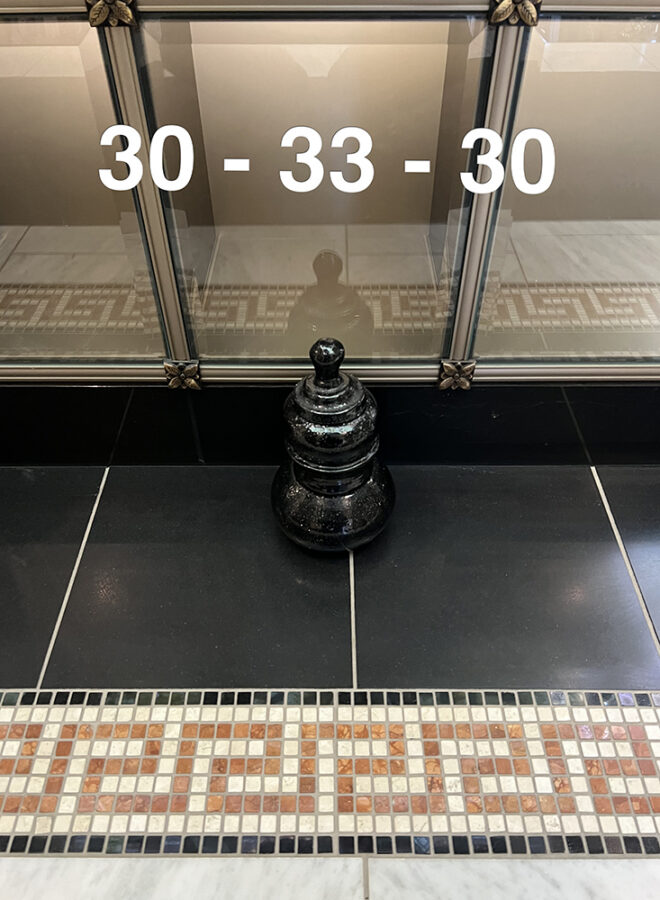
Art, science, and destiny fold back on themselves. Recently, I completed a milestone that finishes this decades-long cycle, securing my final resting place at the San Francisco Columbarium, Hall of the Olympians, Dionysus room, Space 30.
My space sits at ground level, three niches down and three niches over from rights icon Harvey Milk. This “three down, three over” placement—by chance—references Research Project Number 33 and mirrors the numerical catalyst of life’s work.
This creates an unbroken loop:
30 (Pollock): The birth of “all-over” action painting on Earth.
33 (Pietronigro): The total liberation of the gesture in Microgravity.
30 (The Columbarium): The return to Earth, resting at a humbling ground level, anchoring cosmic history to human rights history and The Xenian Node.
This is a documented lineage of human expression moving from Earth to orbit, and back to the soil.
The Architecture of the Multiverse
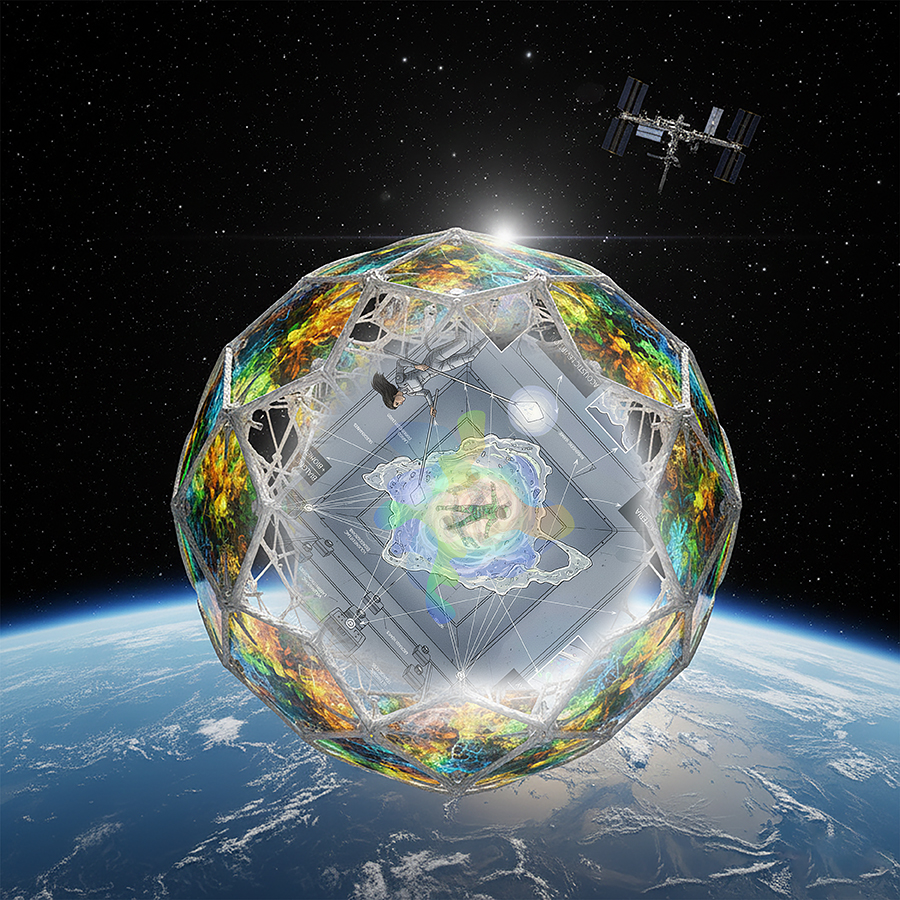
We are living through the dawn of #willoworld—a quantum era computing at the true scale of nature. As an interdisciplinary artist, I see Document 34 as a precursor to this “Quantum Art” perspective. It understands space not as a flat surface, but as a multi-dimensional field where time, gravity, and presence blur.
Through this lens, death is subverted, reminding me of Laughing Jesus on the Cross, an AI collaborative. Through a quantum framework, endings disappear. Consciousness transcends classical limits. We are quite literally laughing at death, replacing a “final curtain” with an eternal dance across the multiverse.
Document 34 stands as an artifact connecting the terrestrial breakthroughs of the 20th century to the celestial, quantum future of The Frontier Age.
It is the roadmap for how humanity carries its heart, radical hospitality, and its humor to the stars.
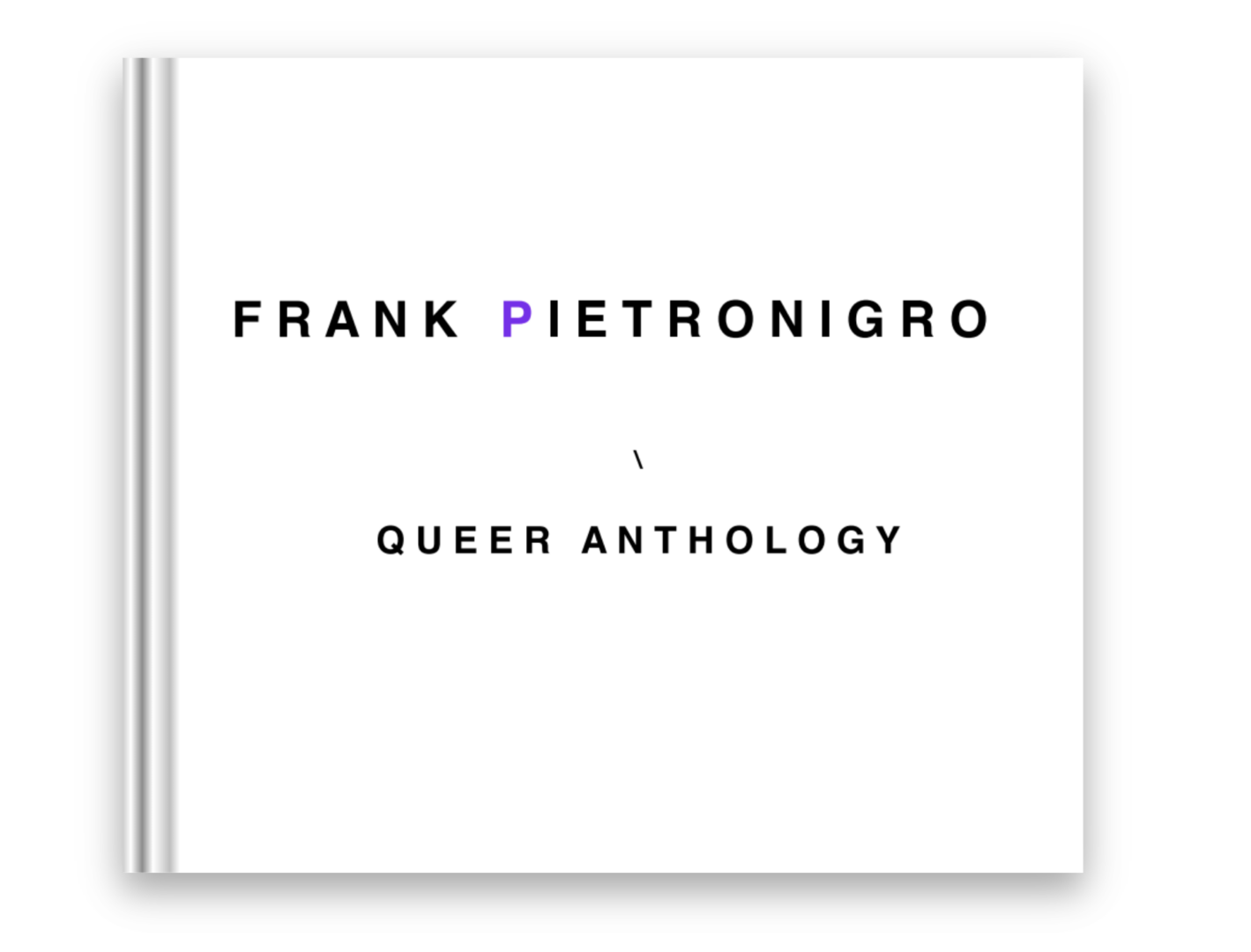
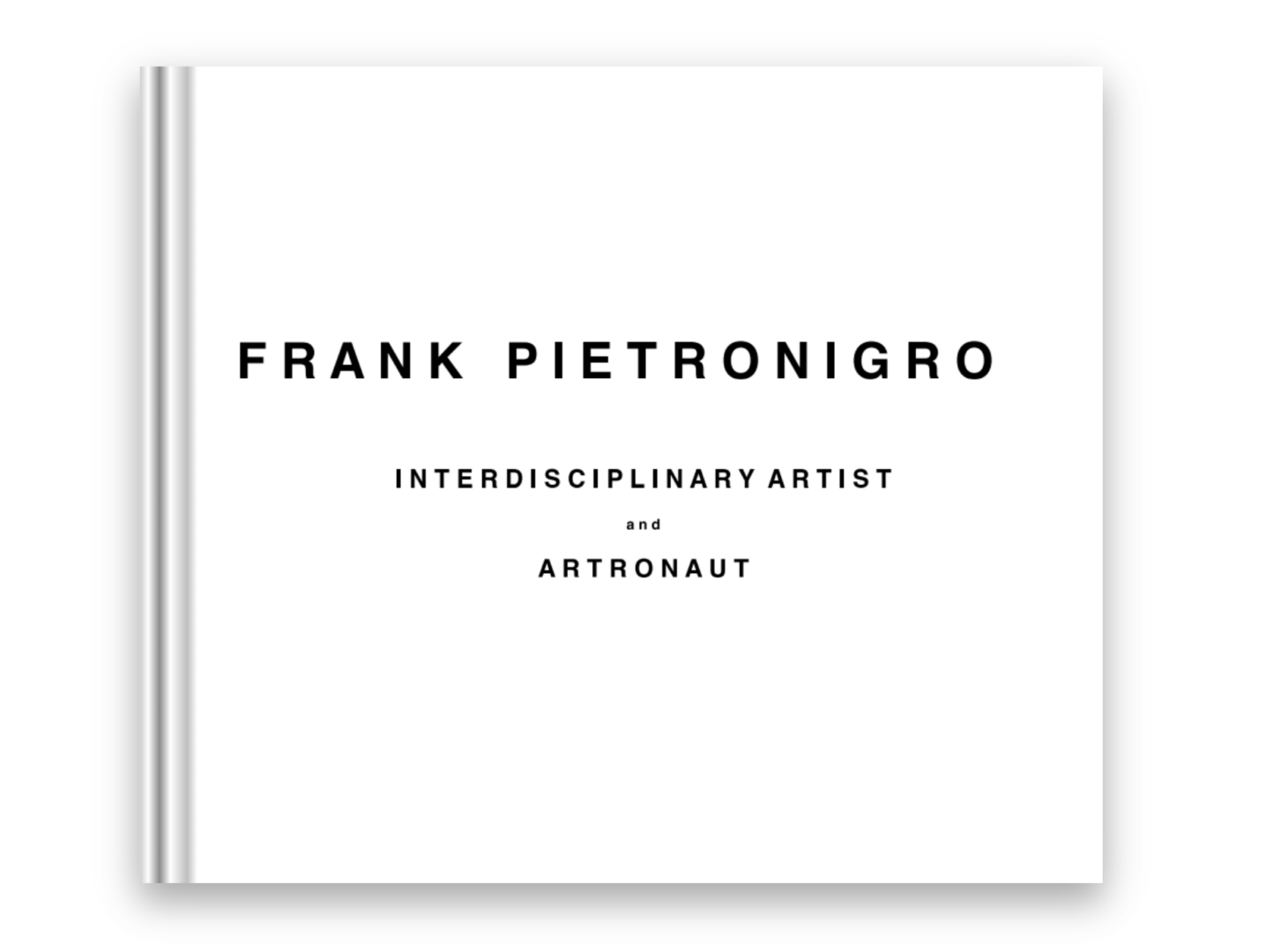
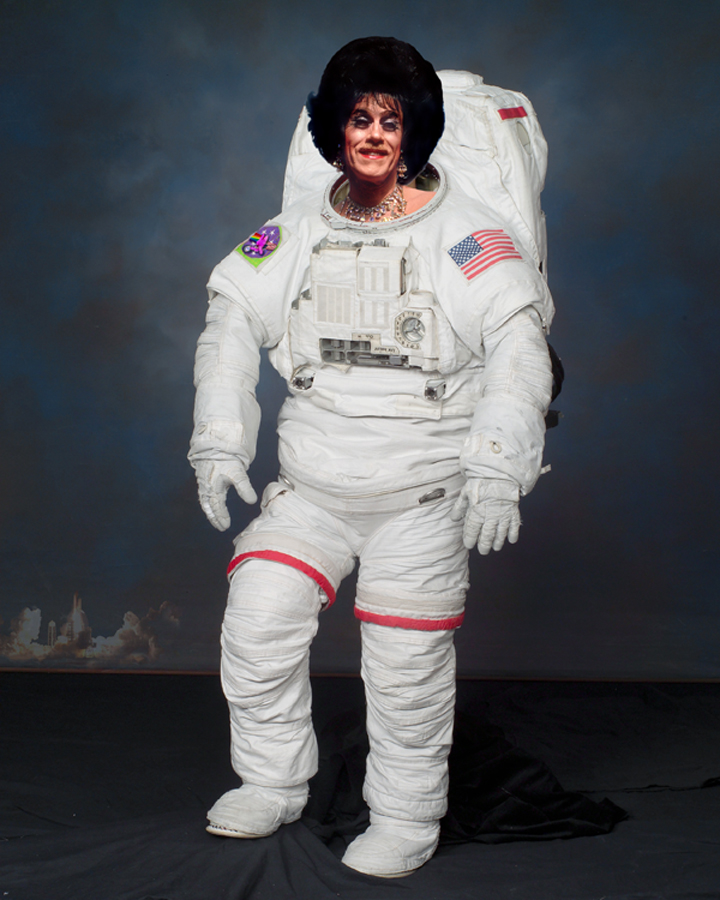
Much queer work is found throughout Frank Pietronigro newly published archival book including Astronaut Steffany, Wedding Liberty, The Lavender Asteroid, and the full essay of Frank’s The Potential Contributions of Queer Culture to the Future of Space Exploration featuring his Astronaut Staffeny who says, “Girl friend~! you best get your copy today before I take off to dance with Selene the Goddess of the Moon.”
A definitive archive of the artist who liberated painting from the canvas. This first edition was published on January 08, 2026. This volume is a Limited Edition Archival Monograph, produced in a large-format landscape orientation measuring 13 × 11 inches (33 × 28 cm).
I designed this book with the interior typeset in Helvetica chosen for its clarity and modern aesthetic while also reflecting the intersection of art, science, and technology. The process of creating this book was rewarding and I feel grateful for having been gifted with so many colleagues, friends and gifts of concepts in much abundance.
This book is dedicated to all those with whom love is shared.
Here is another book created by colleagues of mine who enjoyed meeting Astronaut Steffany that they included her in their book from Bloomsbury Press: Space Feminism.
Drift Painting in Zero Gravity, Image Courtesy of NASA, April 4, 1998
“A truly astonishing experience was provided to me when an opportunity to float in zero gravity and create art aboard NASA’s KC135 turbojet was manifested in collaboration with the California Space Grant Program, the Texas Space Grant Program and the San Francisco Art Instititute. It was incredible to finally realize a vision I first conceptualized and wrote about in 1974 as “drift paintings,” bringing it to life on April 4, 1998 through an inaugural zero-gravity fine arts and space science and engineering collaboration I called Research Project Number 33: Investigating the Creative Process in a Microgravity Environment.”
Arts Commission Festival of San Francisco 1984 and 1985 Directed by Frank Pietronigro
Festival Poster, David McManis, Designer, 1985
Arts Commission of San Francisco Festival Indoor Juried Exhibitions, Civic Auditorium, 1985
“I’ve always been fascinated by the evolution of concepts across the continuum of my life along with the process of authoring papers then making presentations at international conferences all as a direct result of internal growth and shadow work. While all my endeavors bring unique satisfactions, community-based collaborations like directing the Arts Commission Festival of San Francisco have consistently been the most challenging to establish, and, ultimately, the most rewarding. Working with others has its unique challenges as we all know; yet such evolution towards greater internal and external harmony seemed to be consistently reflected as the various styles of my paintings, prints, drawings and others works of fine art evolved to the tempo of my soul’s unfolding”.
Laguna Honda Satellite Exhibition Reception, Arts Commission of San Francisco Festival, 1985
“Being involved in San Francisco’s arts community has enriched my life in so many unexpected and amazing ways. I have made so many friends that love abounds in our city by the bay”
One highlight was serving as the Director of the The Arts Commission of San Francisco Festival in 1984 and 1985, which included a four day outdoor multicultural festival celebrated in Civic Center Plaza, along with indoor juried exhibition of artists from San Francisco nine Bay Area counties hosted in San Francisco’s Civic Auditorium’s Polk and Larkin Halls held in conjunction with the San Francisco Symphony’s Pops Concerts all complimented with fifteen city-wide satellite exhibitions presenting work by diverse communities whose contributions to the festival offered the audience insights into the richness of the arts in the San Francisco Bay Area.
My goal when conceiving so many different exhibitions was to ensure that the power of art selection was placed into the hands of those leaders within those local communities rather than only have art curated into the festival from above. Satellite Exhibitions where showcased at American Indian Contemporary Arts, Artists Embassy International Seniors, CNA/ART, F. J. Michaels Gallery, Fort Mason Art Center, Galeria de la Raza, the Haight Ashbury Community Center, the Recreation Center for the Handicapped, the San Francisco Art Institute, VIDA Gallery Women Artists Cooperative, the Western Addition Culture Center, Laguna Honda Hospital exhibition showcasing art by seniors sixty years or older. Other Satellite Exhibition locations included the Museo Italo Americano, Museum of Modern Mythology at the Embarcadero Center featuring Advertising Imagery, Nathan Hart Gallery featuring computer arts, the Woman’s Building, of course the Pride Center where I decided to include some of my 3D sculptures which I created using pastry-bags for painting into which I embedded found objects.
The San Francisco Art Parade originated at the Ferry Building and moved down Market Street to Civic Center Plaza as floats and marching artists were welcomed into the closing ceremonies, 1985
Sista-Boom Welcomes the Art Parade to Civic Center Plaza during the Closing Ceremony, 1985
Frank Pietronigro also conceived and produced San Francisco’s Art In The Park in 1982 and 1983 in the Music Concourse of Golden Gate Park in San Francisco. The successful reception of this Castro Street Fair affiliated event and its many features were so successful that the Arts Commission of San Francisco commissioned Frank Pietronigro to direct the city’s downtown arts festival in 1984 and 1985.
Art in the Park Poster, David Mc Manis, Designer 1982
The Puppet Parade at Art in the Park in Golden Gate Park’s Music Concourse, San Francisco 1982
Pietronigro’s career is defined by a consistent, intentional, and unparalleled interdisciplinary approach, actively dissolving the boundaries between art, science, education, commerce, and social activism. His academic foundation includes a BFA in Interdisciplinary Arts from the San Francisco Art Institute (1996). His early career spanned significant roles in arts administration, including Director of “Art In The Park” (1982-1983) which was sponsored by the Castro Street Fair Corporation. He went on to become the Director of the San Francisco Arts Commission Festivals (1984-1985). He transitioned into the corporate world when working at Landor Associates aboard the Ferryboat Kalamath the world’s largest strategic design firm’s floating headquarters (1986). He also support the Discovery Channel (1988-1992), producing cause-related marketing events and helping with the conceptual development of Shark Week.
Tunnel Hum Community Performance Collaboration at Art In The Park performed in the pedestriantunnels in the Music Concourse, Golden Gate Park in San Francisco, 1982
This diverse background laid the groundwork for his later pioneering work in space art, his long tenure as a university professor, and his deep involvement in social justice through art. His exhibitions range from traditional venues like the Rittenhouse Square Art Annual (1975) to the Biennale Internationale Dell’Arte Contemporanea in Florence (2003), while his “Documents” series evolved from live webcasts to collaborative installations. His work is cited in academic texts on cyberculture and philosophy, further underscoring his broad intellectual engagement.
Gaetana Caldwell-Smith performs at the Fountain Stage in Golden Gate Park’s Music Concourse during San Francisco Art In The Park, 1982
Keith Sklar Audience Participatory Mural at Art In The Park, San Francisco 1982
Theatre of Yugen performs at Art In The Park, San Francisco 1982
I continue to work as a Professor in the School of Interaction & UI/UX Design at the Academy of Art University teaching video editing and motion graphics with a focus on Adobe After Effects, Premiere and Media Encoder. I enjoy teaching on-line and on-campus, overseeing face to face and zoom graduate and undergraduate level classes while serving on mid-point and final review committees. It is a joy to me to work with young people and I have had the pleasure of serving as Art Director for thousands of print, website design and video project while preparing and updating course outlines, lecture notes, handouts, rubrics and exams for my fifteen-week courses titled: Motion 1: Motion Graphics and Motion and Video Production. Here is an example of a work created during the 2025 Spring Semester by my student Sydney Harmon. I hope you enjoy.
PAINTINGS
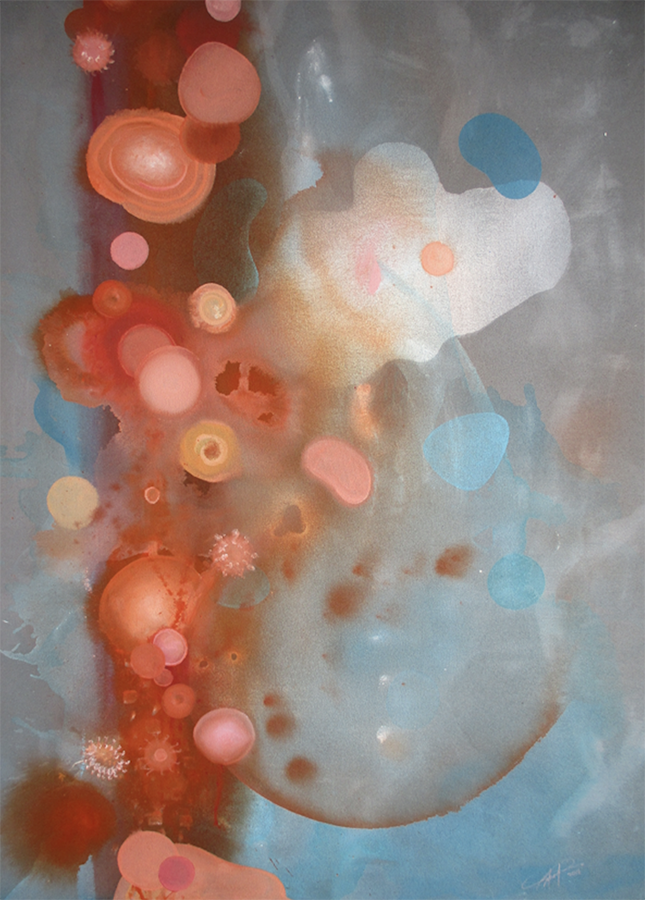
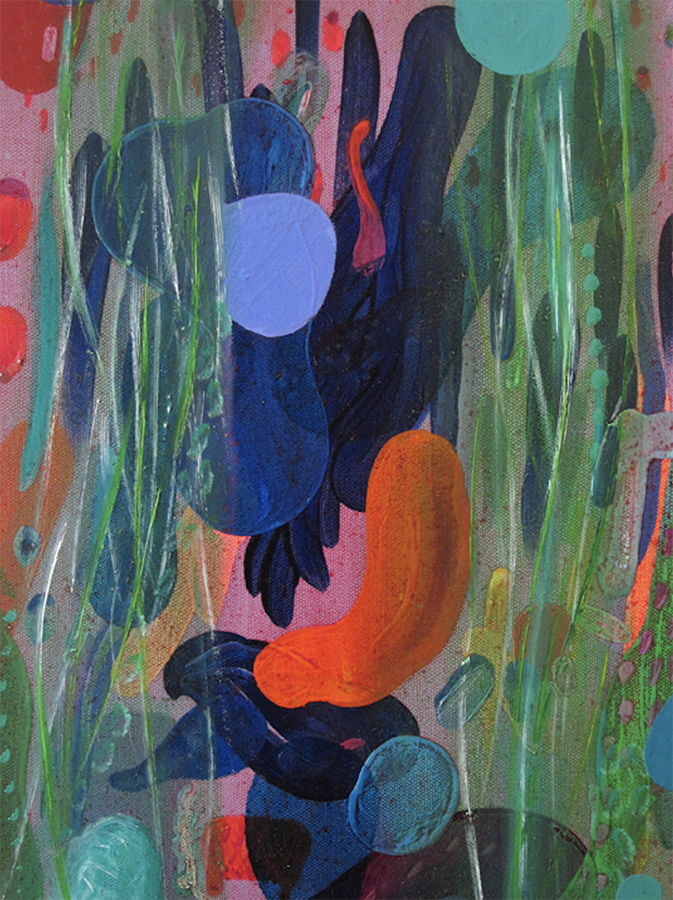
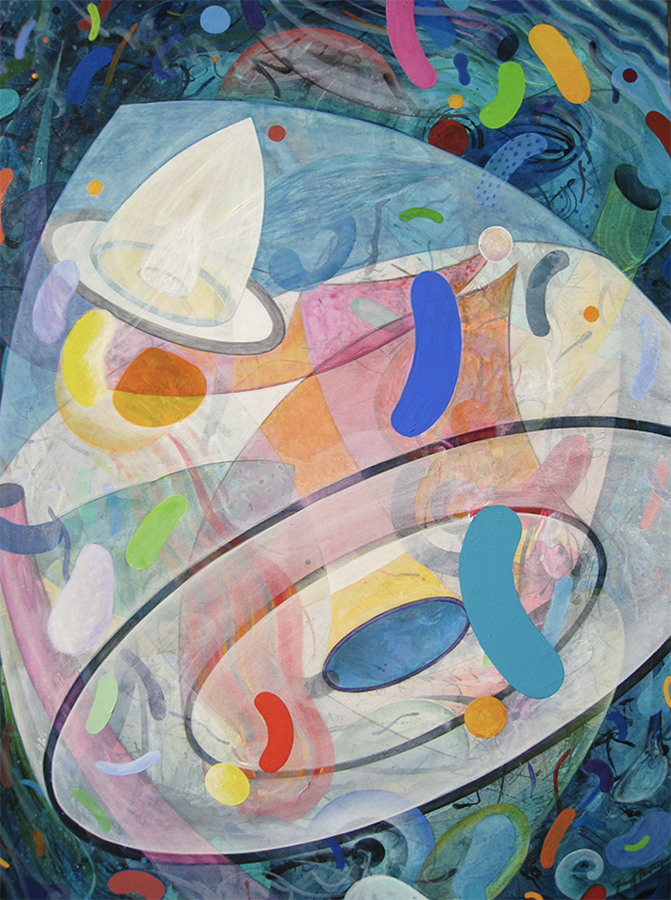
Beings IV, Acrylic on Canvas, 52″x42″, 2002
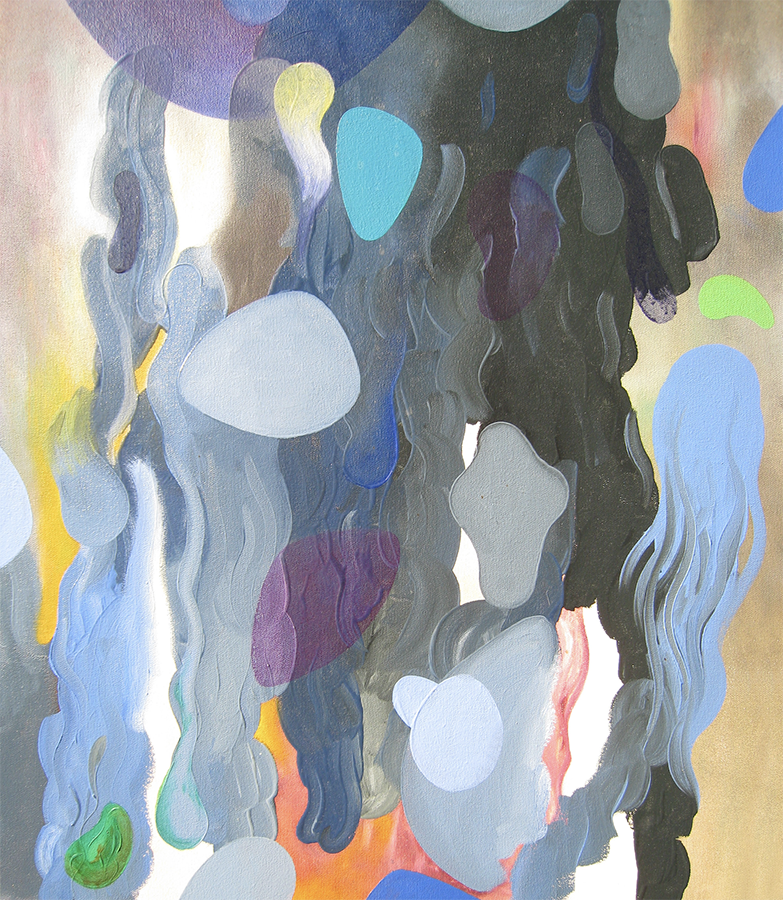
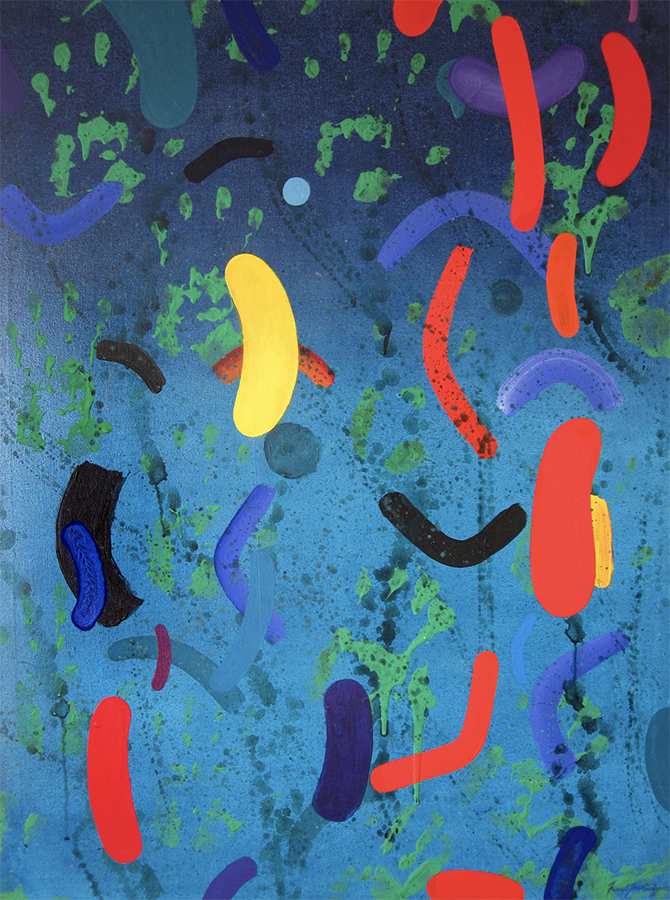
Remagic II, Acrylic on Canvas 47″x34″, 2017
Cellular Differentiation, Oil on Canvas, 24″x20″, 2004
Pluripotent, Oil on Canvas, 14″x10″, 2005
Lady Blue, Acrylic on Canvas, 40″x30″, 2000
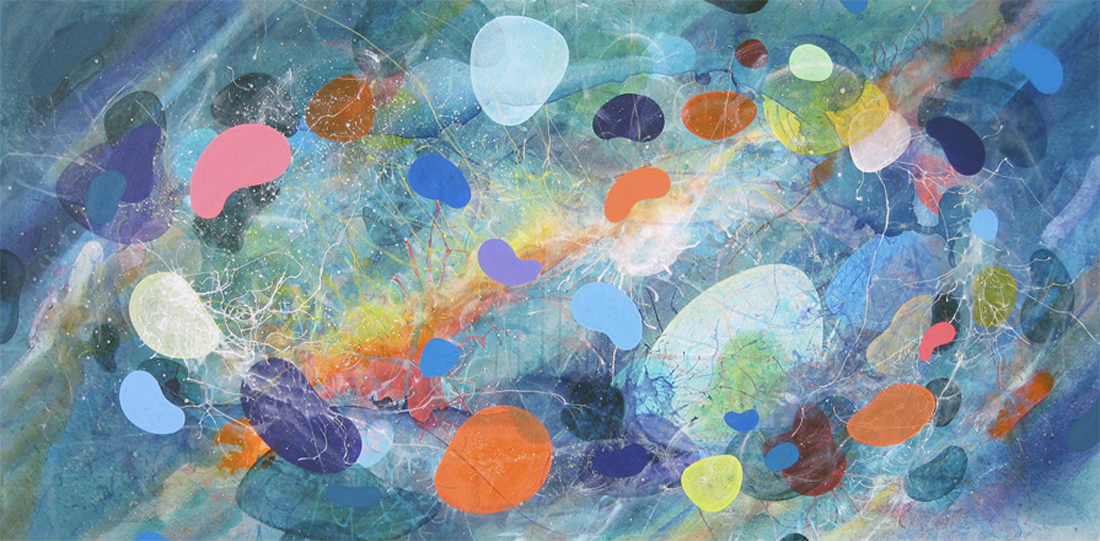
Tachyons Contained in Superstrings, Acrylic on Canvas, 36″x72″, 2009
Levity, Acrylic on Canvas, 30″x60″, 2005
Biophilia, Acrylic on Canvas, 30″x48″, 2009
Passion Flow, Acrylic on Canvas, 60″x60″, 2004
Rain Urn With Beings, Acrylic on Canvas with Silkscreen, 45″x48″, 2005
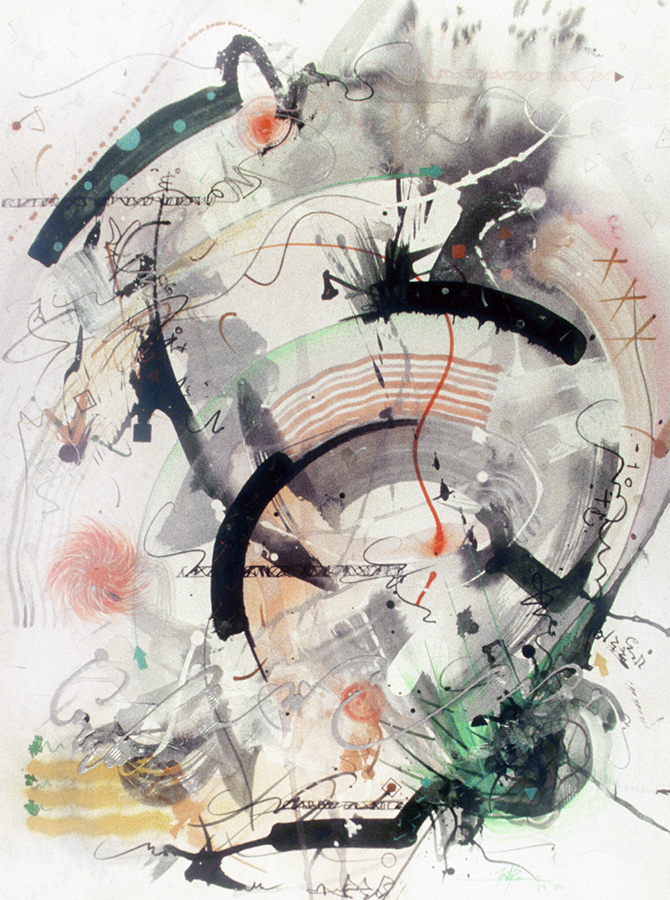
Guidance System Complex, Acrylic and Mixed Media on Arches Paper, 30″x22″, 1989
Energy Interceptors, Acrylic on Canvas, 25″x25″, 1995
Costanza, Oil on Canvas, 72″x48″, 1987
Technophilia, Acrylic on Canvas, 24″x33″, 1991
Electroweak Unification NRG, Acrylic on Canvas, 48″x48″, 1992
Solarcus Median, Acrylic on Canvas, 40″x30″, 2000
Colors Quarks Flavors May Be, Oil on Canvas, 12″x12″, 1987
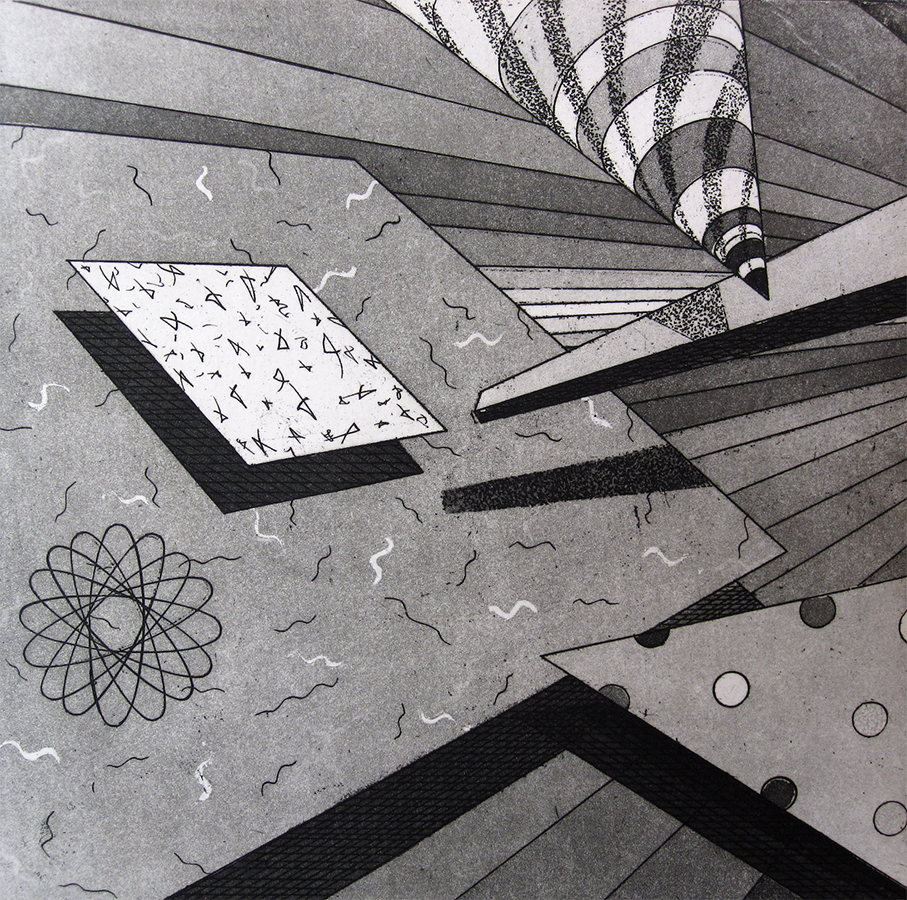
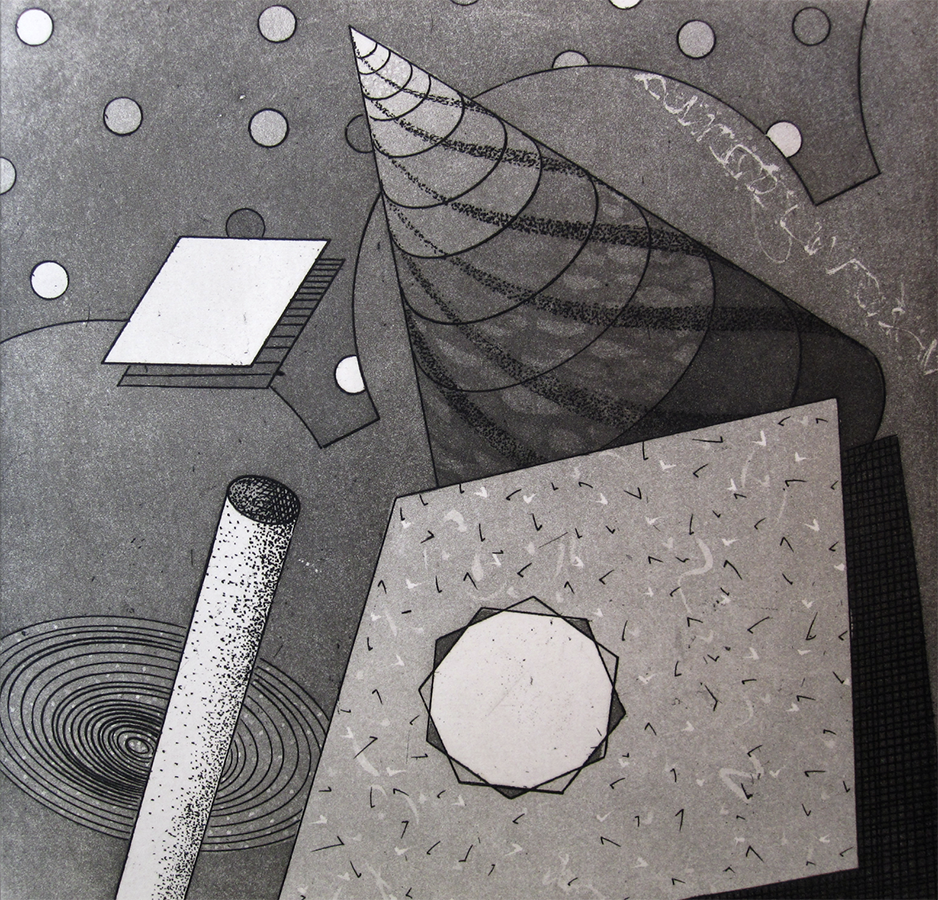
Strategic Play II, Etching with Aquatint, 12″x10″, 1994
Strategic Play II, Etching with Aquatint, 12″x10″, 1994
Strategic Play II, Etching with Aquatint, 12″x10″, 1994
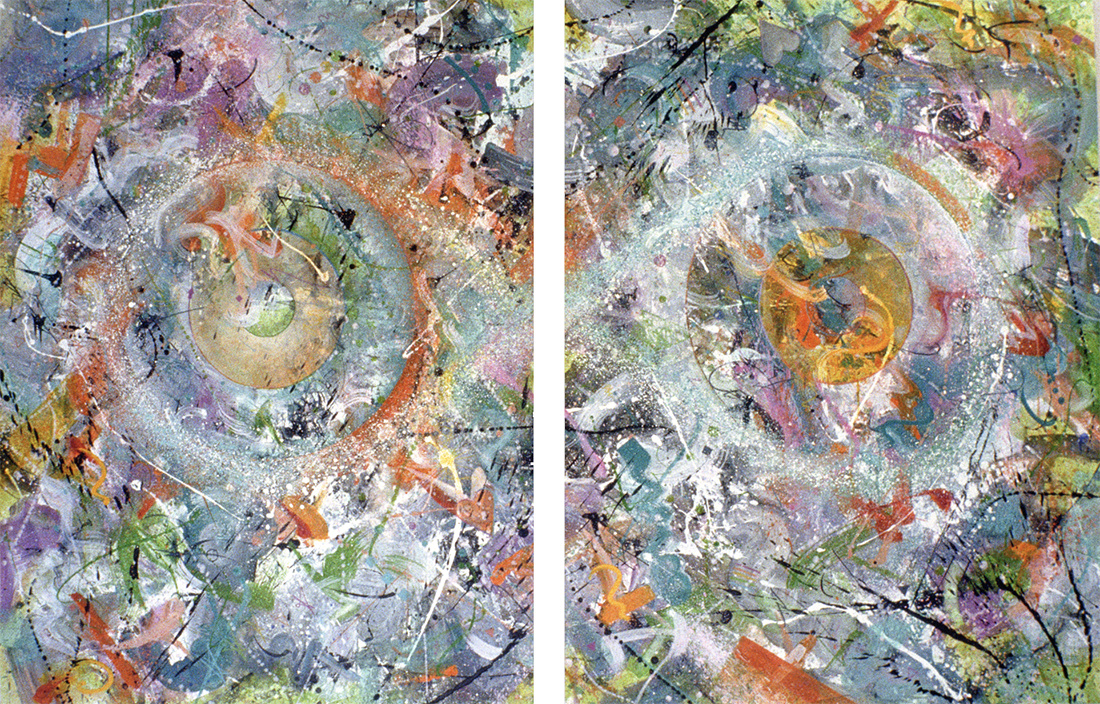
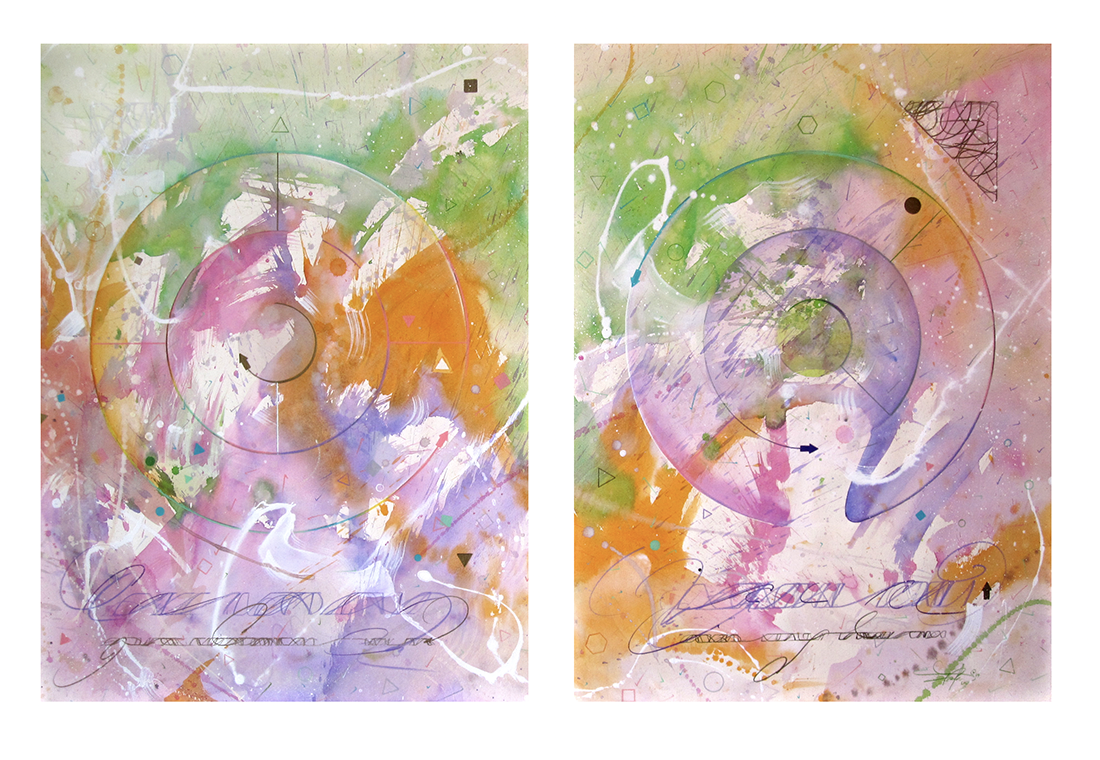
Transfer 1, Mixed Media on Paper, Diptych 52″x86″, 1991
The Journey, Acrylic and Mixed-Media on Arches Paper, 22″x50″, 1989
Ceylonian Morning, Acrylic and Mixed-Media on Arches Paper, 22″x50″, 1989
Three Vehicles, Acrylic and Mixed Media on Arches Paper, 22″x50″, 1989
Spirited Metaphor, Mixed-Media on Paper, 24″x18″, 1990
Source 1, Acrylic and Mixed Media on Canvas, 60″x60″, 1990
Essence, Acrylic on Arches, 22″x30″, 2008
Lataif 2, Acrylic on Whatman Paper, 22″x30″, 2008
Lataif, Acrylic on Arches, 22″x30″ 2008
Kelvin’s Majesty, Acrylic on Canvas, 48″x48″, 1992
Great American Patriots, Acrylic on Canvas, 48″x80″, 1992
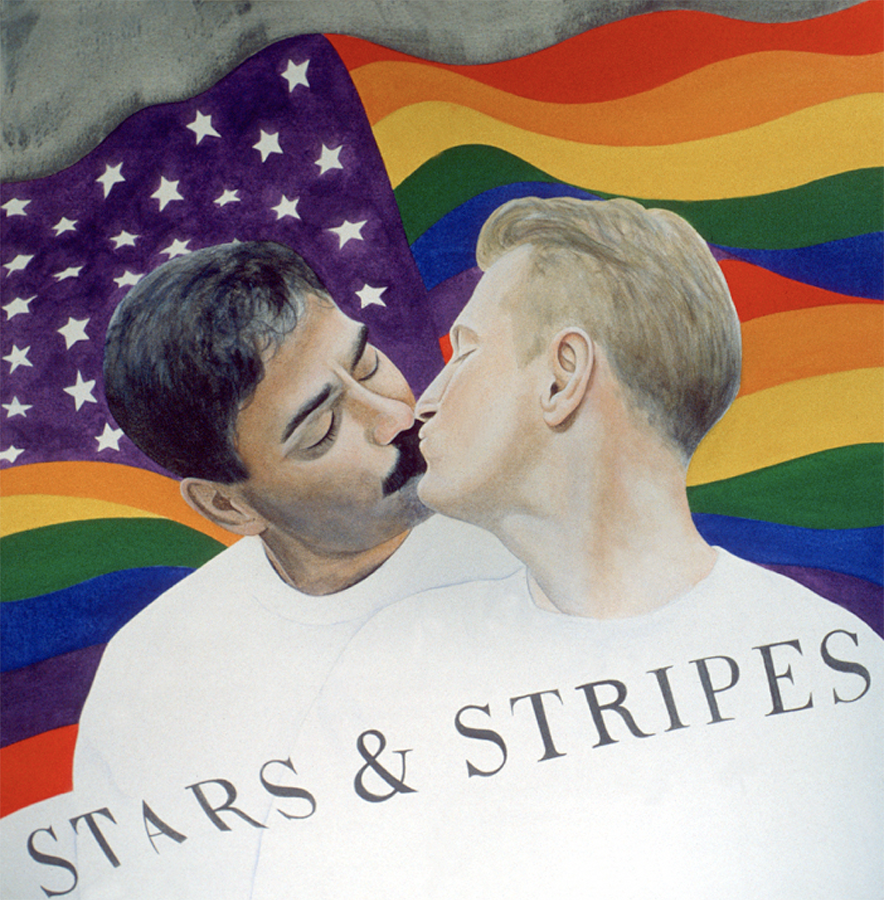
Stars and Stripes, Acrylic on Canvas, 32″x32″, 1993